Vending Machine Licenses and Permits in California
Executive Summary:
California is one of the nation's largest and most lucrative automated retail markets, but learning how to start a vending machine business in california catches many first-time operators off guard. Unlike states that issue a single statewide vending decal or operator license, California relies on a decentralized, home-rule regulatory framework. Meeting California vending machine license requirements involves state tax registration with the California Department of Tax and Fee Administration (CDTFA), city-by-city business licenses, and county health department permits for temperature-controlled food. This guide breaks down California's statutory requirements, complex sales tax rules, city-by-city fee schedules, and health department mandates to help operators navigate vending machine permits and licenses and scale without compliance surprises.
1. The Three-Tier Legal Framework in California
Regulators in California evaluate automated retail installations through three distinct layers. Operating without the proper vending machine permit california documentation in any tier can lead to back-tax liabilities, municipal fines, or forced machine removals.
                             [ Tier 1: State Business & Tax Layer ]
                   California Secretary of State (SOS) & CDTFA Seller's Permit
                                             │
                                             ▼
                             [ Tier 2: Municipal Licensing Layer ]
                    City-by-City Business Tax Certificates & Zoning Clearances
                                             │
                                             ▼
                          [ Tier 3: County Environmental Health Layer ]
             California Retail Food Code (CalCode) & Health Control Lockout Switches
State Business & Tax Layer (Tier 1): Governs your legal corporate entity and statewide sales tax collection. Every operator selling items above $0.15 needs a CDTFA Seller's Permit as part of their vending machine permits and licenses.
Municipal Licensing Layer (Tier 2): Governs city-level authority under California's home-rule doctrine. Fulfilling local vending machine license requirements means operators must hold a business license in every individual city where a machine physically sits.
County Environmental Health Layer (Tier 3): Governs food safety under the California Retail Food Code (CalCode). Health permits are enforced at the county level and serve as a mandatory vending machine permit california requirement for units dispensing perishable or temperature-controlled food.
2. Step 1: Corporate Entity Formation & Franchise Tax Realities
Forming a legal business entity is the foundational step when learning how to start a vending machine business in california to separate personal assets from equipment and site liability.
LLC vs. Sole Proprietorship: Most operators form a Limited Liability Company (LLC) or Corporation via the California Secretary of State online portal (
bizfileOnline.sos.ca.gov). Sole proprietorships do not require state-level filings, but require a Fictitious Business Name (DBA) filing with the county clerk if operating under a trade name.Federal EIN: Obtained free and instantly from the Internal Revenue Service (IRS) to open business bank accounts.
The $800 Annual LLC Franchise Tax: Every California LLC must pay an $800 minimum annual Franchise Tax to the California Franchise Tax Board (FTB), regardless of gross revenue or whether machines have been installed yet.
Important Tax Update: The temporary first-year exemption for newly formed LLCs under AB 85 expired at the end of 2023. All newly formed California LLCs are once again subject to the $800 minimum franchise tax in their first year.
3. Step 2: CDTFA Seller's Permit & Complex Sales Tax Mechanics
California does not issue a standalone statewide vending operator license. Instead, state-level regulation governing vending machine permits and licenses occurs through sales tax licensing via the California Department of Tax and Fee Administration (CDTFA).
Free Permit, Universal Coverage: A CDTFA Seller's Permit is free to obtain, and a single permit satisfies state sales tax vending machine license requirements for all machines operated by the same legal entity across the state.
Mandatory On-Machine Display: Under CDTFA Regulation 1574, every vending machine dispensing items over $0.15 must conspicuously display the operator's name, business address, and CDTFA Seller's Permit number on the cabinet exterior.
Tax-Inclusive Pricing: Vending prices in California are tax-inclusive. Operators remit sales tax out of gross receipts.
Product Taxation Breakdown:
Cold Food Products & Hot Drinks: Taxed at a partial tax rate of 33% of gross receipts (CDTFA Regulation 1574 / Publication 118).
Hot Foods & Carbonated Beverages: 100% fully taxable based on local sales tax rates.
Non-Food Items (Accessories, Amenities): 100% fully taxable.
Exemptions: Bulk candy dispensed from coin-operated machines at $0.25 or less, and purified water dispensed into customer-furnished containers.
4. Step 3: City-by-City Municipal Licensing (8-City Comparison)
Under California's home-rule authority, every city sets its own vending machine license requirements and requires a Business Tax Certificate for businesses operating within its boundaries. Placing machines across three different cities requires three separate business tax certificates, three fee structures, and three renewal calendars.
| City | Licensing Agency | Typical First-Year Fee (Small Operator) | Calculation Basis & Key Local Rules |
|---|---|---|---|
| Los Angeles | LA Office of Finance | $0 at registration | Classified under Class 6 ($2.55 per $1,000 receipts). First year billed at renewal. Small Business Exemption: $0 tax if total receipts are ≤ $100,000 worldwide and renewed on time. |
| San Diego | City of San Diego | $38 | $34 base fee for ≤ 12 employees plus $4 state fee. Must register within 15 days to avoid a $68 surcharge. |
| San Jose | City of San José | $226.89 | $222.89 base tax (owner counts as 1 employee) plus $4 state fee. Income exemptions apply if gross receipts fall below specific poverty thresholds. |
| San Francisco | SF Treasurer & Tax Collector | $59 | $55 base fee for ≤ $100,000 in SF receipts plus $4 state fee. First-Year Free program may waive fees for qualifying commercial locations. |
| Fresno | City of Fresno | $24 + Tax | $20 application + $4 state fee. Retail tax billed quarterly; quarters with ≤ $1,250 in receipts owe $0 tax. Zoning clearance required. |
| Sacramento | City of Sacramento | $34 – $70 | $30 base fee + 0.04% on receipts over $10,000 + $4 state fee. Billed under Business Operations Tax; no small business exemption. |
| Long Beach | LB Financial Services | $108.40 | Billed under coin-op machine owner class. $4.93 per $1,000 receipts (min $104.40) + $4 state fee. Machine must display city license decal. |
| Oakland | City of Oakland | $172.00 | $103 registration + $5 recordation + $4 state fee + $60 retail tax base. Billed under Class A retail sales; no small business exemption. |
5. Step 4: County Environmental Health & CalCode Rules
In California, health permits are regulated at the county level under the California Retail Food Code (CalCode), rather than by state agencies.
Which Machines Require a County Health Permit?
Under CalCode §113938, a health-related vending machine permit california is NOT required for machines that dispense exclusively:
Packaged snacks, cookies, crackers, chips, nuts, popcorn, gum, and hard candy.
Bottled beverages or canned drinks that do not require refrigeration for safety.
Packaged ice.
A county health vending machine permit california IS mandatory for any machine dispensing potentially hazardous / TCS foods, including:
Fresh sandwiches, wraps, and salads.
Milk, yogurt, and dairy-based protein shakes.
Frozen meals or fresh hot foods.
Open-beverage dispensing machines or micro-markets.
Health Permit Cost Comparison Across Major Counties
| Jurisdiction | Environmental Health Agency | Annual Permit Fee Structure | One-Time Application / Plan Review Fees |
|---|---|---|---|
| Los Angeles County | LA County Public Health (Covers all cities except Long Beach, Pasadena, Vernon) | $71 for 1–3 machines; $26 for each additional machine. | Commissary permit required ($274–$401) if handling fresh foods. |
| San Diego County | San Diego DEHQ | $98.50 per block of 10 machines. | Standard application fees apply. |
| Santa Clara County | Santa Clara County DEH (San Jose area) | $401 per 1–5 machines at a single location. | $1,595 plan review fee + $436–$508 application fee. |
| San Francisco | SF Department of Public Health (DPH) | $273 per machine. | $470 application fee + $1,103 plan check fee. |
| Alameda County | Alameda County DEH (Oakland area) | $46 per machine. | $207 initial application fee. |
| City of Long Beach | Long Beach Health & Human Services | $250 per machine ($681/yr for micro-markets). | City-level health department evaluation. |
CalCode Refrigerated Food Operating Rules
Any refrigerated food vending unit operating in California must meet strict technical standards under CalCode to maintain its vending machine permits and licenses:
Temperature Cutoff: Food held for dispensing in a vending machine must maintain 45°F (7.2°C) or below.
Thermometer Integration: An accurate thermometer must be installed in the warmest part of the refrigerated cabinet.
Health Control Cutoff Switch: In the event of a refrigeration failure or power loss where internal temperatures exceed safe limits for over 30 minutes, the machine must automatically lock its doors or disable sales until reset by an operator.
Pre-Packaged Sourcing: All food must arrive at the machine pre-packaged from an approved, licensed commercial kitchen or commissary.
6. Step 5: California Accessibility (Chapter 11B) & Product Restrictions
California Building Code Chapter 11B (ADA+)
California enforces accessibility standards through Chapter 11B of the California Building Code, which imposes stricter vending machine license requirements than federal ADA guidelines.
At Least One Unit Compliant: Where multiple machines are installed at a location (e.g., public buildings, schools, commercial lobbies), at least one of each machine type must comply with Section 11B-309 reach range standards.
Operable Reach Limits: Controls, coin/card slots, touchscreens, and retrieval doors must be between 15 inches (380mm) and 48 inches (1220mm) above the finished floor.
Restricted Products & Age Verification
Tobacco & Vaping Products: Minimum age is 21+. Anyone researching how to start a vending machine business in california involving tobacco must note that operators need a separate Cigarette and Tobacco Products Retailer's License from the CDTFA for each individual machine location, renewed annually. The machine operator and property owner are legally liable for underage sales.
Alcohol Vending: Alcohol sales via automated vending machines are strictly restricted under California Department of Alcoholic Beverage Control (ABC) rules due to age verification mandates.
Public Schools: Vending machines placed in California public schools are subject to California Department of Education nutritional guidelines and local school district policies.
7. Pre-Launch Compliance Checklist for California Operators
Use this sequential checklist before deploying equipment to streamline your vending machine permits and licenses acquisition in California:
[ ] Step 1: Form Business Entity (LLC / Corp via bizfileOnline.sos.ca.gov) & Pay $800 FTB Tax
[ ] Step 2: Obtain Free Federal EIN from IRS
[ ] Step 3: Register for Free CDTFA Seller's Permit (Affix Name, Address & Permit # to Machine)
[ ] Step 4: Apply for City Business Tax Certificates in EVERY city where machines are placed
[ ] Step 5: Verify Product Type — If selling fresh/refrigerated food, apply for County Health Permit
[ ] Step 6: Verify Accessibility Compliance under California Building Code Chapter 11B
[ ] Step 7: Bind General Liability Insurance before presenting certificates to property managers
How Zhigou Tech Supports California Operators
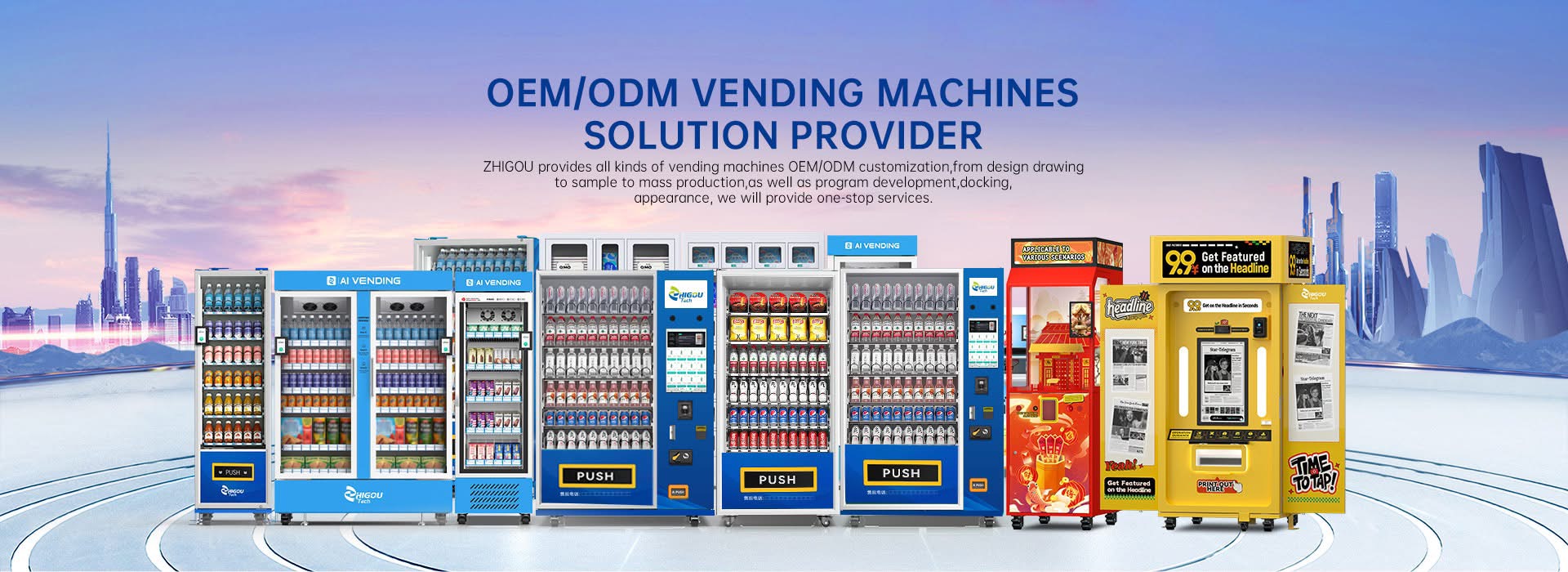
Navigating California’s strict municipal tax rules, Chapter 11B accessibility, and county health department temperature regulations requires hardware built for compliance. Zhigou Tech (智购科技) manufactures smart vending machines and AI vision coolers engineered to simplify obtaining every vending machine permit california operators need:
Built-in Health Lockouts: Fully integrated temperature logging and automated door lockouts compliant with CalCode refrigerated food regulations.
Chapter 11B & ADA Reach Compliant: Ergonomic touchscreen and payment terminal layouts designed within 15-to-48-inch reach boundaries to meet state accessibility vending machine license requirements.
Telemetry & Remote Monitoring: Real-time temperature alerts and automated sales reporting reduce driving time across spread-out California metro routes.
Comprehensive Global Certifications: Certified under CE, LVD, MD, RoHS, and FCC directives, using eco-friendly R290 refrigerants for California energy and environmental compliance.
Partner with Zhigou Tech to launch fully compliant, high-margin unattended retail locations across California with total confidence.