The automated retail density of Japan is the highest in the world: there are about 3.91 million units across Japan, of which 2.61 million units sell products. Vending machines in Japan (jihanki) are not only found in train stations or commercial districts but even in a residential alleyway, hospital corridor and in a rural, lonely highway. They sell more than just soft drinks; people buy hot coffee, fresh food, flowers, daily needs and local farm products all day long.
A century of industrial development has created this ubiquitous network of japan vending machines. But today the market is moving from rapid growth to efficient use of operating resources, with increased labor, demographic changes and competition from convenience stores. A look at japanese vending machines reveals a range of perspectives that can help define the current landscape of modern unattended retail, the importance of hardware reliability, location strategy, and how logistics and operations contribute to the success of vending.
1. How Japan Became the Kingdom of Vending Machines
Japan's automated retail culture evolved through more than a century of continuous adaptation in machine design, payment technology, and distribution efficiency:
1888 – Early Tobacco Patent: Inventor Tawaraya Koshichi patented an early tobacco vending machine, marking Japan's earliest documented experiment in automated sales (JVMA).
1904 – Stamp and Postcard Machine: Tawaraya developed a machine that sold stamps and postcards while functioning as a mailbox—recognized as the oldest surviving japanese vending machine.
1960s – Commercial Beverage Expansion: Coca-Cola installed its first 880 units across Japan in 1962, triggering the rapid commercialization of beverage vending.
1970s – Thermal Innovation: The introduction of hot-or-cold and dual-temperature cabinets allowed japanese vending machines to dispense chilled drinks in summer and warm canned coffee in winter.
1980s–1990s – Urban Network Density: Networks of japan vending machines expanded rapidly across transport hubs, commercial zones, and urban neighborhoods alongside specialized route operators.
2000s Onward – Digital & Smart Upgrades: Operators integrated nationwide cashless payment systems (2002), disaster-relief emergency functions (2003), and smart vending machines connected to cloud-based IoT management platforms.
2. How Many Vending Machines Are in Japan?
According to the Japan Vending System Manufacturers Association (JVMA), Japan recorded 3,910,300 total units at the end of 2024. This figure encompasses both product-selling machines and automated service systems (such as ticket kiosks, lockers, and payment terminals).
Vending Machine Breakdown (2024)
| Machine Category | Units | Market Share |
| Beverage Vending Machines | 2,199,600 | 56.2% |
| Daily Goods & Miscellaneous | 204,200 | 5.2% |
| Food Vending Machines | 81,200 | 2.1% |
| Tobacco Vending Machines | 65,900 | 1.7% |
| Ticket Vending Machines | 63,500 | 1.6% |
| Automatic Service Machines | 1,295,900 | 33.1% |
| Total | 3,910,300 | 100% |
Source: JVMA (2025).
Excluding service kiosks, Japan operates roughly 2.61 million product-selling machines, of which beverages account for 84.1%. Historical JVMA data shows a gradual contraction in total machine counts since 2018 (down from 4.23 million), signaling a mature market where operators prioritize location profitability over sheer unit expansion. Based on a population of 123.8 million, this translates to roughly 1 product-selling japanese vending machine for every 47 residents.
3. Why Are Vending Machines So Popular in Japan?
The popularity of vending machines in Japan is the result of multiple factors such as geographical economy, population structure, consumption culture, payment habits, and social security. These conditions are a highly adapted automated retail solution for Japanese daily life rhythms.
Efficient Utilization of Limited Space
Major cities like Tokyo, Osaka, and Kyoto place an extreme premium on commercial real estate. A standard japanese vending machine occupies less than one square meter and turns unused small spaces—such as train platforms, narrow sidewalks, building alcoves, and rural roadsides—into 24-hour retail locations without incurring high store rents or decoration costs.
Relieving Labor Shortages
Facing an aging population and a shortage of service-industry labor, Japanese businesses turned to automation early. Smart vending machines independently handle product selection, verify payments, and deliver goods without on-site cashiers, significantly cutting ongoing labor costs.
Fast, Low-Social Interaction Purchasing
Japanese consumption culture highly values effortless and immediate transactions. Commuters, office workers taking breaks, and late-night pedestrians can complete purchases in a few seconds without queuing or interacting with store staff—a habit established during the coin era that continues to define modern automated retail.
Mature Payment Infrastructure
The widespread circulation of 100-yen and 500-yen coins laid a solid foundation for early expansion. Modern smart vending machines have since built upon this base, adding support for IC transportation cards (Suica/Pasmo), credit cards, and mobile QR wallets.
High Social Trust & Safety
Low rates of vandalism and property theft enable operators to place japan vending machines in remote rural roads and quiet residential alleys without expensive surveillance or physical cages. Illuminated front panels also serve a public function by lighting up dark streets at night.
Community Resilience in Disasters
Many vending machines in Japan are integrated into disaster-preparedness networks. Specially equipped units switch to a free-dispense mode during major earthquakes to provide emergency drinking water, transforming retail hardware into essential public infrastructure.
4. What Products Do Japanese Vending Machines Sell?
While beverages remain the core offering—accounting for 84.1% of all product-dispensing units—the landscape of vending machines in Japan includes a wide variety of specialized self-service retail formats:
Beverages (Hot & Cold): Dual-temperature cabinets hold over 30 SKUs, offering cold green tea, sodas, and sports drinks alongside hot canned coffee and corn soup in winter.
Ready-to-Eat & Frozen Meals: Frozen food kiosks sell frozen ramen, gyoza, prepared meals, ice cream, and hot snacks at highway service areas.
Fresh Agricultural Produce: Farmers operate specialized units selling boxed fresh eggs, bagged rice, seasonal vegetables, and local fruits directly to consumers.
Emergency & Daily Necessities: Umbrella dispensers at station exits handle sudden rainfall, while specialized flower units provide packaged bouquets near hospitals and transit hubs.
Specialty & Collectibles: Ticket kiosks, mask/sanitizer dispensers, gacha capsule toys, and limited-edition collectibles cater to targeted consumer groups.
Product Category Summary
| Vending Machine Category | Representative Products | Typical Application |
| Beverage Vending Machines | Coffee, tea, water, soft drinks, energy drinks | Streets, stations, offices, schools, and public spaces |
| Frozen Food Vending Machines | Frozen ramen, gyoza, prepared meals, seafood | Residential areas, tourist destinations, and food retail locations |
| Fresh Produce Vending Machines | Eggs, rice, strawberries, vegetables | Farms, agricultural communities, and local markets |
| Flower Vending Machines | Bouquets and fresh flowers | Shopping areas, stations, hospitals, and commercial buildings |
| Daily Necessities Vending Machines | Umbrellas, masks, personal care products | Stations, airports, hotels, and public facilities |
| Entertainment Vending Machines | Toys, collectibles, capsules, and novelty products | Shopping malls, tourist attractions, and entertainment venues |
5. Technology Behind Japanese Vending Machines
Advanced engineering has transformed basic coin-operated boxes into sophisticated smart vending machines:
Dual Thermal Management: Split internal bays cool beverages (2–4°C) while heating canned coffee or soups (55–60°C) simultaneously.
Cashless Ecosystems: Seamless integration of contactless credit cards, IC transport passes (Suica/Pasmo), and mobile QR wallets.
IoT Cloud Telemetry: Real-time inventory tracking, sales analytics, and remote thermal fault alerts.
Energy Efficiency: Advanced heat-pump compressors and LED lighting reduced average annual electricity consumption of beverage units by 19% between 2012 and 2024 (Ministry of the Environment, Japan).
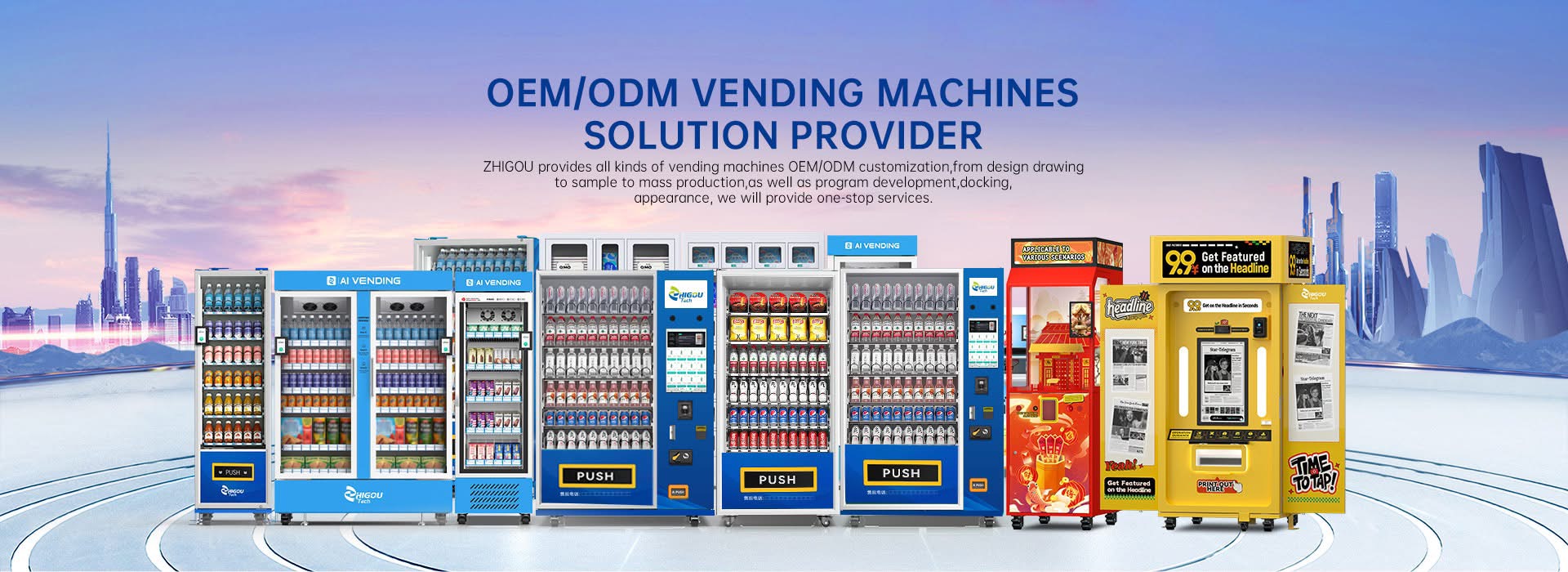
The operational demands of vending machines in Japan market also highlight the importance of choosing a reliable manufacturing partner. Zhigou Technology is committed to providing vending machine solutions that support efficient operation, stable performance, and convenient management. With independent R&D, in-house manufacturing, strict quality control, and cloud-based management systems, Zhigou integrates these capabilities into its vending machine products. The company has also exported large quantities of vending machines to business partners in Japan, gaining recognition from local customers through practical applications in the Japanese market. This experience reflects Zhigou’s ability to meet the operational needs of overseas automated retail markets and provide dependable equipment for long-term vending business operations.
6. The Future of Japan's Vending Machine Industry
Japan's automated retail sector is entering an efficiency-focused stage. While traditional beverage units remain the backbone of the market, future growth will rely on smart vending machines featuring advanced telemetry, energy-efficient refrigeration, comprehensive cashless acceptance, and specialized product categories.
Future success across vending machines in Japan depends on how effectively operators manage restocking routes, lower power consumption, and tailor product selections to hyper-local demand. Japan earned its title as the “Kingdom of Vending Machines” through decades of investment in placement, hardware reliability, and logistics. For global operators, the key takeaway is clear: success in automated retail depends not on sheer unit count, but on ensuring the right machines, products, locations, and software platforms work together seamlessly.
Frequently Asked Questions
Why does Japan have so many vending machines?
A combination of extreme urban density, consumer demand for speed, exceptional public safety, and decades of automated retail infrastructure investment.
How many vending machines operate in Japan?
As of late 2024, JVMA recorded 3.91 million total units, which includes 2.61 million product-selling machines (predominantly beverages) and 1.30 million automated service kiosks.
Are Japanese vending machines cashless?
Many modern smart vending machines support contactless IC cards, credit cards, and mobile wallets, though cash remains accepted across a vast portion of legacy hardware.
Is the Japanese vending market still growing?
No. The overall count of vending machines in Japan has contracted slightly from its historical peak as operators prune underperforming locations to prioritize unit profitability.
Can vending machines still compete with 24/7 Japanese convenience stores (Conbini)?
Yes. While convenience stores offer broader product variety, japan vending machines excel in immediate micro-location proximity on train platforms, factory floors, and quiet residential streets.
What legal permits or regulatory approvals are required to install a vending machine in Japan?
Outdoor location placement requires site ownership or landlord lease agreements. Additionally, machines selling food or fresh produce must comply with the Food Sanitation Act, and electrical components must pass PSE safety certification.
What can other countries learn from Japan's vending machine industry?
Other markets can learn from Japan's emphasis on location selection, product suitability, hardware reliability, cashless integration, and efficient route management.
References
att.JAPAN. Vending machines.
Coca-Cola Japan. The history of the vending machine.
Dempsey, H., & Lewis, L. (2026, March 14). Japan loses its thirst for vending machines. Financial Times.
Japan Vending System Manufacturers Association (JVMA). (2025). Vending machine penetration figures, 2024 edition.
Ministry of the Environment, Japan. (2025). Distribution of beverage vending machines and trends in electricity consumption.
National Museum of Nature and Science. Systematization: History of vending machine technology.