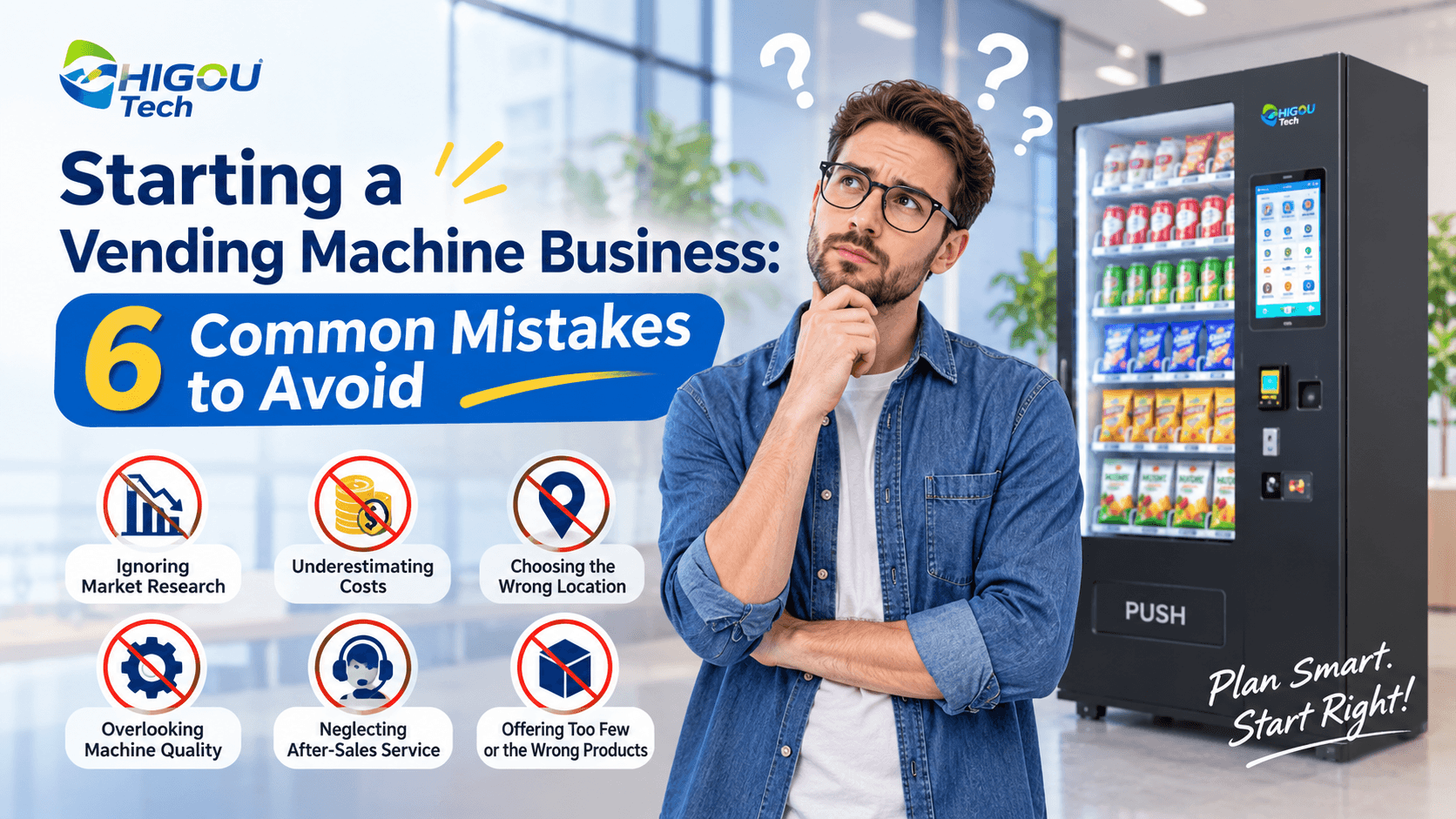
Starting a vending machine business is a great way to get into automated retail—it's inexpensive, hours are flexible, and you can earn money 24 hours a day without being at the counter. Many new entrants don't know how to start a vending machine business or realize the discipline it takes to turn a cabinet into a cash-flowing asset. Many retailers think of automated retail as a "set and forget" passive income business, and that causes a lack of inventory, high location fees, unnecessary mechanical failures, and difficult working capital.
This guide identifies six common vending machine mistakes experienced by novices, and experienced operators can incorporate these data-driven recommendations into their vending machine business plan to avoid them.
Common Mistake 1: Choosing the Wrong Vending Machine Location
A very expensive error an individual can make when starting a vending machine business is believing that just about any busy sidewalk, transit corridor, or street corner is a solid location to be found for a vending business enterprise. Dwell time and captive buying intent are more important to automated retail than actual pedestrian numbers. Commuters at a busy outdoor intersection do not typically stop to look at a machine, but customers in an enclosed, captive environment actively seek out machines for quick refreshments, convenience items, or other reasons.
What would be the daily sales of a machine if it is located on an open street where there is a lot of foot traffic during rush hour? The daily sales of a machine may be disappointing and not even cover the rent of the site if the machine is located on an open street with a lot of foot traffic during rush hour. The same cabinets, on the other hand, line a breakroom in a manufacturing facility, a waiting room at a hospital, an apartment parcel-pickup lobby, or a dormitory at a University, and you capture customers who are already sitting, relaxed, and ready for instant convenience.
How to Avoid This Pitfall:
Audit Dwell Time Before Signing: Spend at least two to three peak hours observing your target site. Prioritize locations where people naturally wait, gather, or work in shifts (such as office lobbies, gyms, schools, warehouses, and residential mailrooms) over pass-through hallways.
Negotiate a 90-Day Trial Clause: When drafting your location placement agreement with a property manager or facility owner, request a 60- to 90-day pilot period with performance-based exit or relocation terms. If foot traffic does not convert into target daily transactions, you can relocate the asset without penalty.
Match Hardware to Site Constraints: Confirm doorway widths, power availability, cellular signal strength, and ADA reach-range clearances before delivering equipment.
Common Mistake 2: Choosing the Wrong Products to Sell
First-time operators frequently stock machines with niche, expensive, or imported specialty items because those products carry higher per-unit markups on paper. In practice, profitability when starting a vending machine business depends on inventory turnover velocity—how fast capital converts back into cash—rather than theoretical margin alone. Stocking $6 artisanal snacks inside a blue-collar warehouse or student dorm typically results in slow sales, expired stock, and wasted shelf space.
Experienced operators balance their planograms using a proven 80/20 product mix: roughly 80% of shelf facings go to high-demand, recognizable staples (bottled water, popular sodas, energy drinks, and familiar salty snacks) that drive consistent daily traffic, while the remaining 20% test higher-margin impulse items tailored to the specific demographic.
How to Avoid This Pitfall:
Tailor Assortment to Location Demographics: Focus on value-priced, high-energy staples in factories, schools, and residential buildings, while reserving premium cold-pressed juices, protein shakes, or fresh meals for gyms, hospitals, and corporate offices.
Test in Small Batches: Start new locations with smaller case quantities across a broader SKU variety during the first 30 days. Let real point-of-sale telemetry—not personal taste—dictate which slow movers get replaced.
Monitor Expiration Dates Rigorously: Especially when selling perishable food or dairy items, track batch shelf life via your Vending Management System (VMS) and use scheduled late-day markdowns to clear aging stock before spoilage occurs.
Common Mistake 3: Neglecting Vending Machine Maintenance
In today's day and age, you don't need to continually monitor the vending machine, but it can significantly shorten the life of equipment and lose customer confidence if you don't maintain it properly. A single jammed spiral, smudged touch screen, or warm beverage due to a condenser coil covered in dust can cost you the business of repeat customers forever.
The most costly avoidable losses in automated retail are due to refrigeration failure. Dust, lint, and debris build up on bottom-mounted condenser coils, increasing the workload of the compressor, resulting in higher electricity consumption and ultimately leading to thermal burnout and loss of hundreds of dollars in chilled inventory.
How to Avoid This Pitfall:
Check Cloud Telemetry Daily: Review your mobile VMS dashboard each morning to verify internal cabinet temperatures, payment terminal connectivity, and coin/bill mechanism status before heading out on routes.
Follow a Weekly & Monthly Cleaning Routine: During every restocking visit, wipe down touchscreens, card readers, and delivery chutes, and clear debris from sensor paths. Every 30 to 60 days, vacuum dust from refrigeration condenser coils and inspect door gaskets for tight magnetic sealing.
Stock a Basic Field Spare-Parts Kit: Keep high-wear essentials—such as spare spiral motors, optical drop sensors, door switches, and fuses—on hand so minor issues can be resolved in minutes rather than leaving a prime machine out of service.
Common Mistake 4: Ignoring Ways to Increase Vending Machine Sales
Many beginners learning how to start a vending machine business assume that simply plugging in a stocked machine is enough to maximize revenue. While vending relies on convenience, intentional merchandising and simple promotional triggers consistently lift average transaction values—especially on modern touchscreen cabinets and AI grab-and-go smart coolers.
Clear visual presentation, digital bundle offers, and seasonal product rotation turn occasional passersby into habitual buyers. For instance, pairing a morning coffee or energy drink with a discounted pastry, or rotating chilled electrolyte drinks to eye-level shelves during summer heatwaves, directly increases multi-item basket size.
How to Avoid This Pitfall:
Optimize Planogram Eye-Level Placement: Place your highest-margin, fastest-turning items between 40 and 55 inches off the floor where customer sightlines naturally land first.
Use Digital Touchscreens for Cross-Selling: If your machine features an interactive display or digital price tags, configure simple combo promotions, loyalty rewards, or time-of-day discounts to encourage multi-item purchases.
Keep Glass Clean and Well-Lit: Ensure internal LED lighting works at full brightness and front anti-fog glass remains spotless so products look fresh and inviting from across the room.
Common Mistake 5: Underestimating Startup and Operating Costs
A common financial trap when starting a vending machine business is spending 100% of your startup budget on the upfront cost of vending machine hardware, leaving zero cash reserve for wholesale inventory, credit card processing settlement delays, fuel, or location deposits. Even if you explore existing vending machine businesses for sale rather than buying brand-new equipment, a machine sitting half-empty because the owner ran out of restocking capital loses customer momentum immediately.
The table below outlines a practical reference allocation for a solid vending machine business plan when structuring initial startup funds:
Startup Budget Category | Reference Share | Primary Operational Purpose |
Equipment & Delivery | 60% | Upfront cost of vending machine units, cashless card readers, crating, and initial site delivery |
Initial & Replenishment Inventory | 25% | First full warehouse stock load plus 4–6 weeks of wholesale restocking capital |
Operating & Emergency Reserve | 15% | Location security deposits, spare parts, insurance, and unexpected maintenance |
(Note: Actual percentages vary depending on whether you buy new equipment, purchase refurbished models, or acquire existing vending machine businesses for sale, so always keep dedicated working capital separate from the machine purchase price itself.)
How to Avoid This Pitfall:
Start Lean and Scale From Proven Cash Flow: Begin with one to three well-researched locations rather than overextending on a large fleet on day one. Reinvest net profits from your first machines into subsequent units once route metrics are proven.
Track Unit Economics Monthly: Monitor gross margin, spoilage rate, card-processing fees, and location commission per machine every month so underperforming sites can be re-merchandised or relocated early.
Common Mistake 6: Failing to Track Sales and Inventory
Relying on gut instinct—driving fixed routes without checking stock levels, guessing which SKUs sell best, or ignoring local safety and accessibility rules—caps profitability and exposes your business to regulatory fines. Modern automated retail is driven by data: telemetry platforms reveal exact hourly sales velocity, cashless vs. cash ratios, and cooling stability across every cabinet.
Use Dynamic Route Scheduling: Let real-time stock data dictate your restocking schedule so you only drive to machines that have reached predetermined replenishment thresholds.
Build OEM & Peer Support Channels: Partner with an equipment manufacturer that provides comprehensive technical documentation, remote diagnostics, and operator training rather than leaving you to troubleshoot alone.
Choosing the Right Vending Machine for Your Business
Remote Inventory & Temperature Visibility: Machines equipped with cloud telemetry let operators check shelf stock levels and cooling temperatures from a phone before leaving home, eliminating unnecessary inspection trips and catching refrigeration issues before inventory spoils.
Matching Machine Architecture to the Location: Different environments call for different dispensing designs—standard spiral machines fit high-turnover packaged snacks in warehouses, motorized elevator cabinets protect fragile glass bottles or fresh meals, and open-shelf AI grab-and-go coolers speed up multi-item purchases in busy offices and apartment lobbies.
Reliable Technical & Spare-Parts Support: Working directly with an experienced OEM ensures access to clear wiring schematics, remote engineering diagnostics, and readily available replacement parts so minor repairs take minutes rather than weeks.
Frequently Asked Questions
How many vending machines do you need when starting a vending machine business?
Most beginners start with one to three machines in carefully vetted locations. Starting small lets you learn restocking rhythms, test product demand, and refine your vending machine business plan with manageable upfront capital before reinvesting profits into additional units.
What is the average cost of vending machine equipment for beginners?
The upfront cost of vending machine units typically ranges from $1,500 to $3,500 for refurbished or entry-level mechanical snack and drink machines, and $3,500 to $8,500+ for new touchscreen models, elevator-delivery systems, or AI vision smart coolers, excluding cashless card readers and freight.
Should beginners buy new machines or look for vending machine businesses for sale?
Both options can work depending on your goals. Buying new equipment from a reliable OEM gives you factory warranties, modern cashless payment systems, and cloud telemetry, whereas evaluating vending machine businesses for sale can provide immediate cash flow from established locations—provided you thoroughly audit existing site contracts, machine condition, and historical sales records before buying.
Is owning a vending machine business profitable?
Yes, when machines are placed in locations with strong dwell time and managed with disciplined inventory control. A well-placed machine typically generates steady gross margins of 40% to 55% on snacks and beverages, with profitability driven by restocking efficiency, low spoilage, and reasonable location commissions.
What is the single biggest mistake beginners make when learning how to start a vending machine business?
Securing poor locations without evaluating customer dwell time is the #1 mistake. A high-traffic corridor where people walk past quickly will almost always underperform a moderate-traffic waiting room, breakroom, or residential lobby where people pause and look for refreshments.
How much money should I keep in reserve after buying my first vending machine?
Following a standard 60% equipment / 40% working capital reference split, aim to keep roughly 35% to 40% of your total startup budget separate from the machine purchase itself—allocating around 25% for wholesale inventory replenishment and 15% for location deposits, spare parts, and operating contingencies.