Maintaining hygiene, product quality, equipment function, and customer trust all depend on routine vending machine cleaning. Particularly in high-traffic places like shopping malls, train stations, and schools, dust, food residue, spilled beverages, and moisture tend to build up on surfaces customers frequently touch and inside the machines. Vending machine maintenance isn’t as hard as you might think. Below, we’ve outlined five simple steps to make cleaning your vending machines a breeze.
Benefits of a Clean Vending Machine
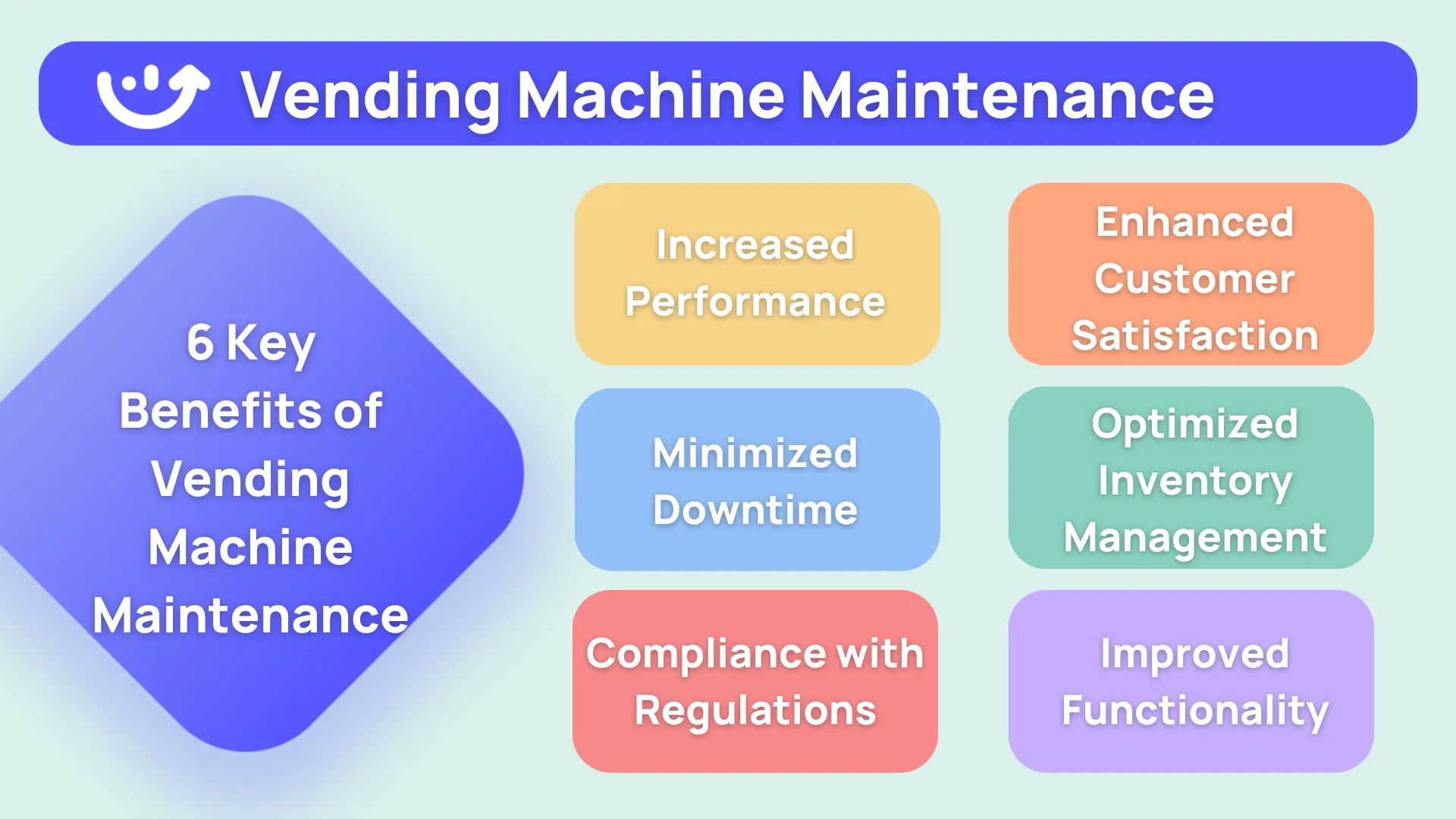
Vending machine cleaning offers many benefits to both the operator and the consumer. Here are some of the key benefits:
Positive Brand Impression: A well vending machine maintenance creates a welcoming and comfortable atmosphere, encouraging customers to make purchases. It also reflects well on the business, conveying a commitment to the customer experience.
Improved Customer Experience: A clean vending machine with a clear product display makes the product selection process more enjoyable for customers. Providing an excellent customer experience results in retention and higher sales.
Reduced Maintenance Costs: By keeping your vending machine clean, you can help prevent jams, spills, and other issues, such as blockages and malfunctions, which translate to costly repairs and downtime. Regular cleaning ensures a healthy vending machine, improves machine longevity and function, reduces downtime, and ensures customers consistently get the desired products.
Healthy Vending Machine, Healthy Outcomes: A dirty vending machine can become a breeding ground for harmful bacteria and viruses. This poses a significant risk to the health of individuals who consume food and beverages processed or dispensed by these machines. Regular and thorough sanitation is crucial to prevent the potential spread of illness and ensure the safety of consumers.
A Step-by-Step Guide to Cleaning Your Vending Machine
Before you go to the automatic vending machine site to begin cleaning, it’s important to do two things:
Gather the necessary supplies, including warm water, a cloth, a cleaning solution of your choice, and a vacuum or broom.
Common cleaning supplies include:
· Microfiber cloths
· Soft cleaning brushes
· Mild detergent
· Food-safe surface cleaner
· Clean water
· Disposable gloves
· Paper towels
· A small vacuum cleaner
Avoid abrasive sponges, corrosive chemicals, excessive water, or high-pressure cleaning equipment. These may damage the self-service vending machine's surface, electronic components, seals, or other sensitive parts.
2. Check inventory so you know what will need to be restocked. This will help save you time so you don’t have to visit the automatic vending machine twice.
Next, we can carry out the cleaning work in sequence by region, starting from the exterior of the aircraft, the interactive screen, then the internal cargo compartments, the loading ports, the cooling and ventilation openings, and finally the rear cabin inspection.
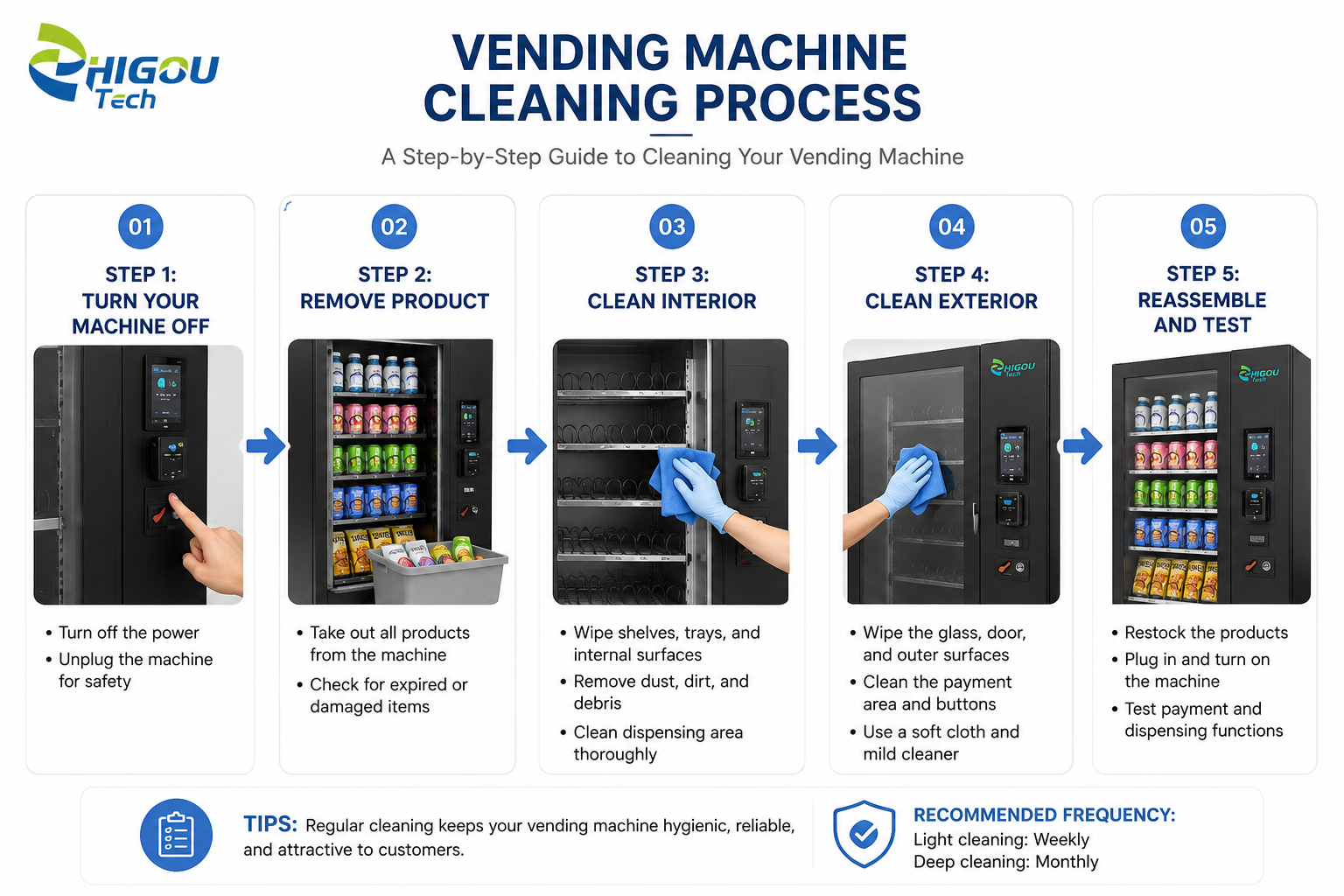
Step 1: Turn Your Machine Off
Always turn off and unplug your self-service vending machine before beginning any kind of cleaning routine. It’s unsafe to work on equipment that is plugged in and has an electrical charge.
Step 2: Remove Product
Next, remove all products from the interior of the automatic vending machine. Since you’ll be using cleaning supplies and chemicals, you don’t want to risk any food or drink product becoming contaminated. Store your products securely where they won’t spoil while they’re out of the machine.
Step 3: Clean Interior
Once you’ve emptied all product trays, wipe down the trays and dispensing mechanisms with a cleaning solution and a damp cloth. Remove all residue to ensure everything is clean and functions properly. The internal compartments, shelves, and pickup openings of the automatic vending machine are the most easily overlooked cleaning areas. After opening the cabinet door, first use a soft-bristled brush and vacuum cleaner to clean the debris and dust that have fallen into the gaps of the shelves. For spring-type vending machines, it is necessary to carefully clean the remaining debris in the spring compartments to prevent debris from getting stuck in the springs and causing loading failure; for AI visual opening cabinets, the internal camera lens should be gently wiped with a clean and dust-free cloth to ensure clarity and avoid dust blocking, resulting in recognition failure. The pickup opening is a high-frequency contact area. It is recommended to wipe and disinfect it every time when replenishing goods, and promptly remove any residual product residues to prevent mold and produce odors.
Step 4: Clean Exterior
For the exterior cleaning of the body, it is recommended to use a dry, ultra-fine cloth to wipe off the floating dust on the surface of the shell. If there are stubborn stains such as handprints or splashes of beverages, you can dip the cloth in a small amount of neutral cleaner, wring it until it is completely moist but without dripping water, and then wipe the panel, glass window, and corners of the machine. For shells with custom prints or theme patterns, be sure not to vigorously rub with corrosive liquids to prevent the printed patterns from fading or falling off.
The touch screen is the area that customers come into contact with most frequently and is also the key area for cleaning. The screen's surface is vulnerable to grease and fingerprint residue. It is advised to lightly mist a dust-free cloth with a small amount of 75% isopropyl alcohol before gently wiping the screen's surface. Avoid spraying liquid straight onto the touch screen. The motherboard circuitry may be easily harmed if the moisture seeps through the screen's cracks and reaches the inside. To determine whether the touch click reaction is sensitive, wait for the screen to completely dry after cleaning before reconnecting the power and turning it back on.
The ventilation and cooling vents, as well as the bottom wheels, also need to be included in the periodic cleaning checklist. If too much dust accumulates in the cooling vents, it will directly lead to poor heat dissipation of the equipment, a decrease in the cooling efficiency of the refrigerated vending machines, excessive load on the compressor, increased power consumption, and faster aging of the equipment. You can use a brush to clean the dust from the cooling grilles every week. For models with wheels, regularly remove the wire ends and dirt wrapped around the wheels to ensure smooth movement of the machine.
Step 5: Reassemble and Test
You can put your products back into the self-service vending machine and reassemble it after everything has been cleaned and dried. After you've plugged the machine back in, it's usually a good idea to test it to make sure everything is operating as it should.
Cleaning Different Types of Vending Machines
Snack Vending Machines
Outdoor snack vending machines are more likely than other models to accumulate crumbs and packing detritus. To avoid pest issues, vacuum frequently. Look for places where candy wrappers or chip bags may have ripped or leaked.
Over time, grease from snack items can accumulate on surfaces. Use degreasers made specifically for food vending machines for sale. Before replenishing, make sure that all cleaning residues have been eliminated.
Beverage Vending Machines
Beverage dispensing machines face different challenges, especially sticky spills from sugary beverages. These spills can jam coin mechanisms and attract insects. Clean up any spills immediately and check for hidden sticky spots.
A drink vending machine for sale also deals with condensation and moisture. Keep drainage systems clean and check for mold growth in humid environments. Ensure good air circulation to prevent moisture problems.
Hot Beverage Machines
Due to milk products and hot liquids, coffee and hot chocolate machines require extra care. These materials can deteriorate rapidly and lead to major hygienic issues. When cleaning coffee brewing systems, adhere to the manufacturer's instructions.
Descale hot water systems regularly to prevent mineral buildup. Hard water areas need more frequent descaling.
Common Mistakes to Avoid When Cleaning a Vending Machine
Even during routine cleaning, improper operation can still cause damage to the vending machine. Here are some common mistakes:
1. Spraying liquid directly onto electronic devices
Spraying a cleaning agent directly onto the screen, card reader, control board, or other electronic components can cause damage to the automatic vending machine.
2. Using rough cleaning tools
Rough sponges or strong cleaning agents may scratch the self-service vending machine surface or damage the protective coating of the equipment.
3. Using too much water
Excessive water may enter the electrical or mechanical components. Therefore, a damp cloth should be used for wiping instead of pouring water directly into the automatic vending machine or spraying water onto it.
4. Ignoring the product pickup area
The product pickup area is a frequently touched area by consumers and is prone to accumulating dust, debris, and product residues.
5. Not checking the products during cleaning
During the cleaning process, the products should also be checked for their expiration dates, whether the packaging is damaged, and whether there is any product leakage.
Conclusion
Proper cleaning and maintenance of vending machines may seem simple and tedious, but it can actually reduce your operational costs over the long term. A vending machine that looks neat on the outside and is clean on the inside is more likely to gain consumer trust and increase sales, while also significantly extending the equipment’s service life, thereby bringing more stable and long-term returns to your unmanned retail business.
FAQ
How often should a vending machine be cleaned?
High-touch surfaces and the product dispensing area should generally be cleaned frequently, while deeper interior cleaning can be performed on a weekly or monthly schedule depending on the machine and operating environment.
Can I use water to clean a vending machine?
Use water sparingly. A damp microfiber cloth is generally preferable to spraying or pouring water directly into the machine. Keep water away from electrical and electronic components.
What parts of a vending machine need the most cleaning?
High-touch surfaces, payment interfaces, product dispensing areas, shelves, product storage areas, and locations where food residue or liquid can accumulate generally require the most attention.
Reference
Deepak, 8759. (2025, July 2). The complete guide to vending machine cleaning and sanitising: Best practices.
Vending Machine Upkeep. (2024, June 26). Your special guide.
Naturals2Go. (n.d.). How to clean your vending machine.