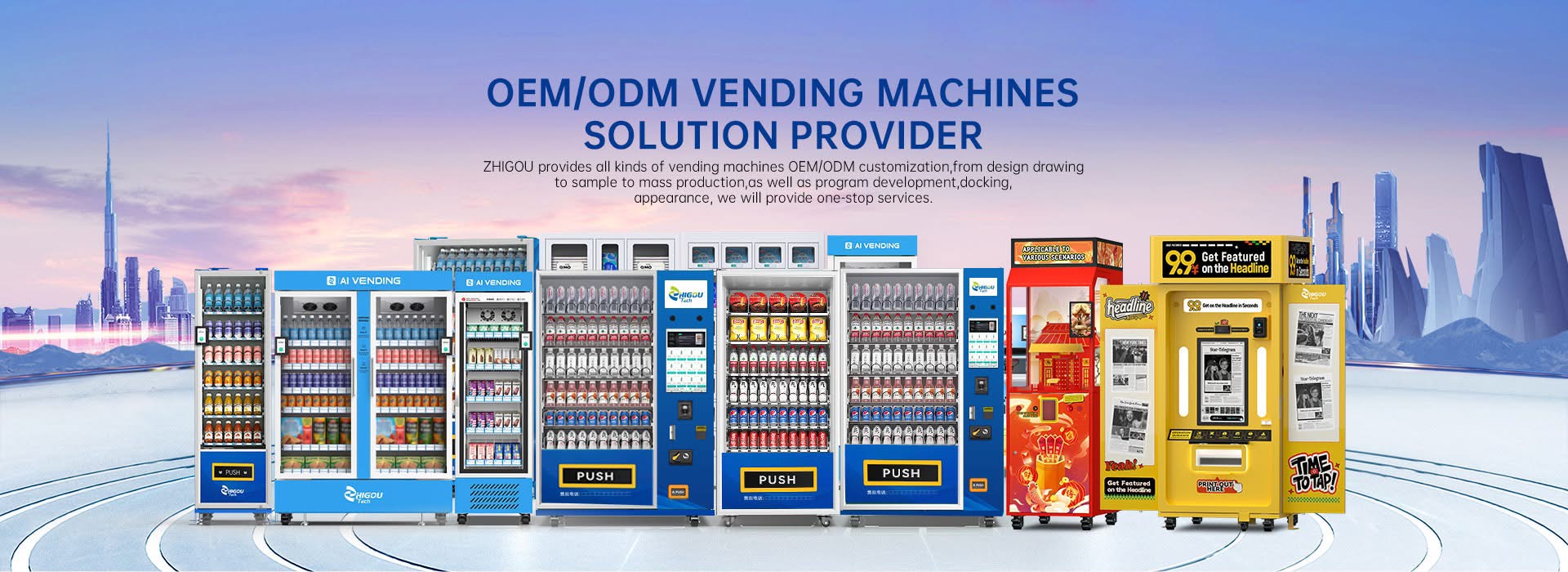
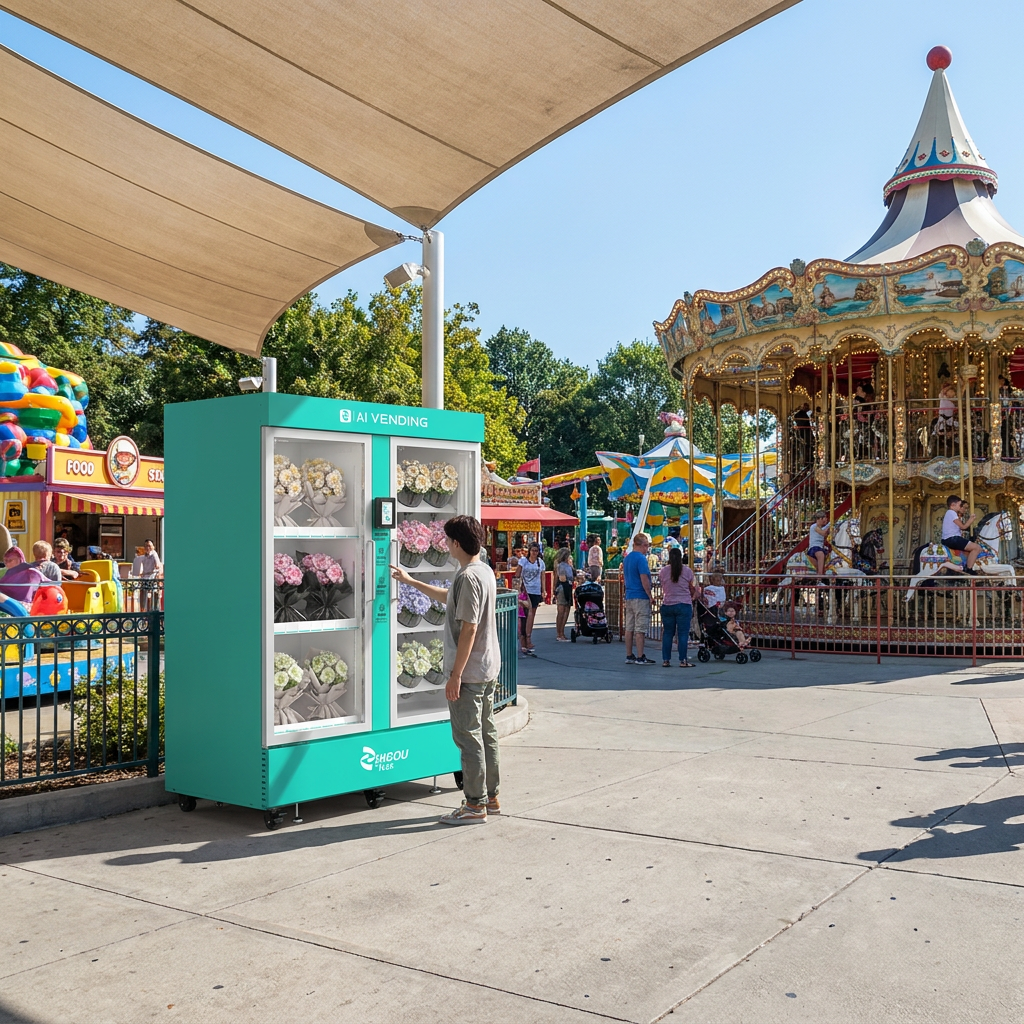
Flower vending machines with glass doors flashing warm light are becoming a "romantic standard" in global cities, appearing under New York office buildings in the morning, inside Paris train stations in the afternoon, and next to Tokyo communities in the evening. You can get a fresh bouquet of flowers in 30 seconds by tapping the screen to choose flowers and scanning the code to pay. This vending machine for flowers, which combines several clever features, not only addresses a number of issues with conventional flower consumption, but it also spurs a global revolution in flower retail. Its popularity stems from the exact alignment of functional improvements with customer demands.
1. Core Function Decomposition: Redefining the Flower Consumption Experience
Intelligent Preservation System: Secure the New "Digital Greenhouse"
The unique technology of the flower vending machine for sale has fully resolved the "freshness preservation" problem, which was the main source of frustration for flower retailers. The three preservation features of the current mainstream 24-hour flower vending machines are as follows: first, a precise temperature control module that maintains the internal temperature between 4 and 25 degrees Celsius and automatically adjusts based on the characteristics of various flower materials, including roses, tulips, and lilies. The second is a dynamic humidity control system that keeps the air humidity in the ideal range of 65% to 75% to prevent flowering materials from drying out and withering. The third is the controlled atmosphere preservation technology developed by Wageningen University in the Netherlands, which delays the respiration of flowering materials by adjusting the ratio of oxygen to carbon dioxide. According to actual testing by the American FlowerX brand, the freshness period of roses in their vending flower machine can reach 18 days, with a hydration level 30% higher than that of traditional flower shops and a loss rate of only 2.5%, far below the industry average of 15%.
Convenient interaction and operation: the efficiency revolution of unmanned mode
A high-definition touch screen presents flower bouquets categorized by scene (such as "daily self-pleasure," "holiday gifts," "condolences and blessings," etc.) along with flower material introduction and maintenance advice, providing the user with a minimalist "full process self-service" experience. Accepts popular international payment methods like credit cards, Apple Pay, Google Pay, and more. The shipping channel will appear automatically after payment is finished, and there is no need for human participation during the withdrawal process.
The purpose of scenario adaptation: switching from "fixed stores" to "mobile flower shops"
The flower vending machine for sale can precisely adjust to a variety of situations and satisfy distinct needs through customized functions because of its small size (a single unit takes roughly 1.2–1.5 square meters) and adaptable deployment capabilities. A "succulent+smart flowerpot" combo aisle has been added to the Silicon Valley Science and Technology Park, allowing mobile apps to be connected to track the health of plants;
A built-in AI recommendation system in the vicinity of Tokyo hospitals automatically matches the "Carnation+Soothing Green Plant" package after entering the patient's condition; in Paris's upscale shopping district, the apparatus has a temperature-controlled gift box warehouse that offers special preservation space for upscale bouquets and supports personalized engraved ribbon services. After scenario-based features were optimized, the repurchase rate of hospital peripheral equipment reached 32%, significantly higher than the industry norm, according to statistics from BerlinBlume in Germany.
2. The underlying logic of global popularity: the two-way alignment of demand and supply
1. Instant consumption demand explosion: filling the gap of "fragmented flower purchasing"
Flower consumption has changed from being a "holiday necessity" to a "daily high frequency" due to the growth of the "self-pleasure economy" on a worldwide scale. According to Statista research, people between the ages of 25 and 35 make an average of 12 purchases annually, with 70% of these transactions taking place in unplanned "fragmented scenarios" like wishing to surprise relatives after working overtime, decorating workstations while commuting, or briefly visiting friends. Traditional flower businesses' limited branches and set operating hours (usually 9:00–21:00) are unable to satisfy this urgent need. In locations like New York and Los Angeles, the 24-hour flower vending machines have perfectly filled this vacuum, creating a "500-meter romantic service circle" with 18% of sales occurring between 1 and 6 am.
2. Highlighted cost advantage: resolving traditional retail's earnings conundrum
The main issue with traditional flower sales is the exorbitant price. Using Oxford Street in London as an example, a 10-square-meter flower shop needs three employees and has an average annual rent of £8000, with labor costs topping £4000 per month; A vending flowers machine 's floor area efficiency can reach up to 200 euros/square meter/day, which is three times that of typical flower stores, but its rent is only one-fifth of its initial cost and it doesn't require personal monitoring. The typical cost of self-service bouquets in the US market is $15–25, which is 30% less than comparable items in flower shops. This cost advantage encourages operators to lay out extensively and lowers bouquet pricing. The global market is expected to reach 3.2 billion US dollars by 2025, with Germany and the United States leading with 580 million US dollars and 1.2 billion US dollars, respectively, demonstrating the potential for development brought about by cost benefits.
3. Increasing Emotional Consumption: Going from "Purchasing Flowers" to "Transmitting Temperature"
In addition to purchasing commodities, modern customers buy flowers to express their feelings. In Rotterdam, Netherlands, the "Public Welfare Farmers' Flower Cabinet" is directly connected to Kenyan flower farmers, with each bouquet of flowers accompanied by a story card of the place of origin, making consumption a public welfare activity; in Japan, the 24-hour flower vending machines is linked with disaster prevention departments and automatically launches a "bouquet of hope" during earthquakes, accompanied by emergency manuals to convey comfort; In Times Square, New York, the flower vending machine for sale incorporates augmented reality functionality. After buying flowers, one can create unique love animations to post on social media, satisfying young people's needs for social expression. The global market is predicted to develop at a compound annual growth rate of 15% and reach $7.8 billion by 2032 as a result of this "functionality+emotion" combination, which transforms smartphones from "flower-selling tools" to "emotional carriers".
The Future of Flower Vending Machines
With the continuous development of unmanned retail, on-demand retail, and digital management, vending machines for flowers may evolve from simple automated sales devices into smart flower retail terminals in the future. More precise temperature control technology, a wider variety of cashless payment options, cloud-based device management, smart inventory analysis, and digital product displays are all likely to further enhance the consumer experience and operational efficiency.
At the same time, the range of applications for 24-hour flower vending machines is likely to continue expanding. From airports, hospitals, shopping malls, and hotels to residential communities, office buildings, university campuses, and tourist attractions, flowers are gradually moving beyond traditional flower shops into a wider array of everyday consumption settings. In the future, traditional flower shops, e-commerce platforms, and flower vending machines for sale may also form a closer integration, building a more flexible flower retail network through methods such as online ordering, offline pickup, and multi-location self-service sales.
Conclusion
Flower vending machines are gaining increasing attention, essentially as a result of the combined effects of changing consumer demand and advancements in retail technology. Consumers want a more convenient and faster way to purchase flowers, while traditional flower shops face certain limitations in terms of business hours, store coverage, and operating costs.24-hour flower vending machines offer new solutions for traditional flower retail through 24/7 self-service, flexible location deployment, temperature-controlled freshness preservation, digital payments, and remote management. More significantly, vending machines for flowers are changing how flowers interact with customers by doing more than just putting bouquets inside a machine. In order to make it easier for customers to buy flowers at the exact locations where they are needed, they transport flowers from fixed retail locations to airports, hospitals, hotels, office buildings, neighborhoods, and commercial spaces.
Therefore, the flower vending machine for sale is best viewed as a new retail channel distinct from traditional flower shops and online flower sales. From Paris to Berlin, from New York to Tokyo, this small vending machine for flowers has not only revolutionized flower sales but also made romance accessible. With the continuous empowerment of technology, future flower vending machines for sale will become emotional partners who understand consumers better, continuing to write a new chapter in the global romantic economy. If you want to learn more about the flower vending machine, please click on the Zhigou vending machine.