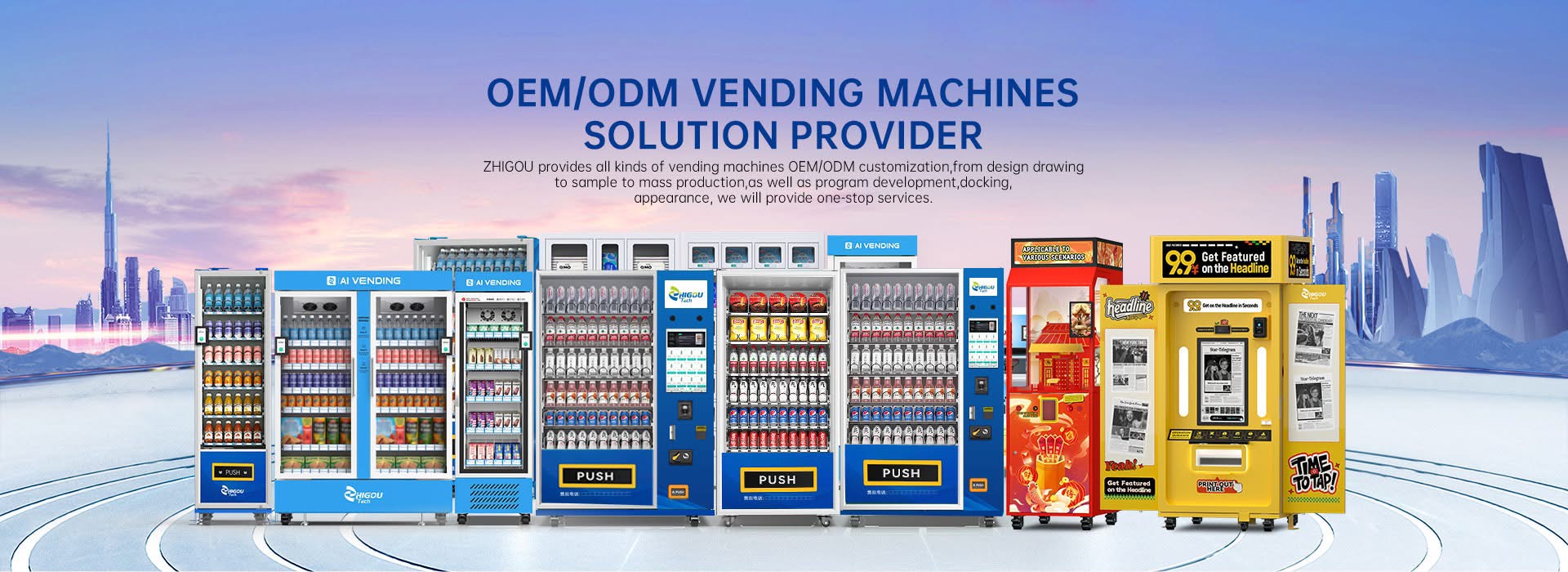
One of the most important capital allocation choices an automated retail operator will make is whether to purchase new or secondhand equipment. Weighing short-term capital expenditures against long-term operational predictability is crucial before purchasing a new vending machine. While the allure of a low initial outlay makes pre-owned machinery appealing to entrepreneurs launching a used vending machine business, factory-new units offer seamless software integration, telemetry, and maximum asset longevity. Evaluating the true new vending machine cost against physical depreciation curves and payment hardware requirements is critical for overall fleet profitability.
The Direct Comparison of New vs. Used Vending Machines
Secondary Sites
Evaluation Dimension | New Vending Machines | Refurbished (Factory-Certified) | Used (As-Is / Secondary Market) |
Upfront Purchase Cost | $3,500 – $10,000+ | $2,200 – $5,000 | $1,200 – $3,500 |
Warranty & Support | 12 to 36 months (Parts & Labor) | 90 days to 1 year (Parts only) | None (As-Is) or 30 days |
Payment Hardware | Touchless / Credit / QR pre-installed | Upgraded MDB to support card readers | Cash-only or obsolete MDB protocol |
Refrigeration & Power | R290 eco-friendly, low kWh use | Serviced system, fresh seals | Legacy refrigerants (R134a/R22), high draw |
Depreciation Curve | Highest year 1–2 loss (20–30%) | Moderate, stabilized value | Minimal residual depreciation |
Target Location | Class A Offices, Hospitals, Airports | High-traffic Warehouses, Schools | Industrial Yards, Breakrooms, Motels |
1. New Vending Machines: Advantages and Strategic Capital Deployment
Investing in brand new vending machines essentially buys operational certainty and brand authority. When an operator places a pristine machine in a high-traffic venue, they are securing the site owner’s trust and ensuring continuous service without unexpected breakdowns. If you choose to buy a new vending machine, you gain immediate access to modern consumer preferences where cash is rarely used.
Factory-new models come equipped with native Multi-Drop Bus (MDB 4.2+) and DEX protocols, allowing instant integration with credit card readers, mobile wallets, and QR-code payment gateways . Contemporary designs feature dynamic touchscreens and sleek LED lighting, significantly increasing impulse purchases in premium settings. While the initial new vending machine cost is higher upfront, factory warranties protect your asset for 12 to 36 months, covering compressors and logic boards while reducing energy consumption by 30% to 50%.
2. Used & Refurbished Vending Machines: Cost Control and Arbitrage
For budget-conscious operators establishing a used vending machine business, pre-owned and refurbished units remain popular for expanding fleet size quickly on limited capital. However, operators must clearly distinguish between a professionally remanufactured unit and an unchecked secondary-market machine.
Factory-refurbished units are stripped down, deep-cleaned, fitted with fresh seals, and retrofitted with modern control boards. They offer a middle ground when compared to brand new vending machines. In contrast, as-is units carry the lowest price tag but come with risks like hidden leaks and obsolete logic boards. While starting a used vending machine business offers a faster breakeven timeline (often 6 to 12 months), unexpected repairs can quickly wipe out initial acquisition savings.
3. Comprehensive Total Cost of Ownership Analysis over Three Years
Relying solely on the sticker price when deciding to buy a new vending machine versus a pre-owned unit often leads to inaccurate financial planning. True profitability is determined by evaluating the Total Cost of Ownership (TCO) across the equipment's deployment lifecycle.
Consider a 3-year scenario comparing a new vending machine cost of $6,500 against a $2,000 used unit. The new unit requires no retrofitting and minimal maintenance, bringing total outlay to $6,900. The used machine requires $600 in card reader upgrades, $600 in initial servicing, and $1,800 in ongoing repairs, leading to a TCO of $5,000. Though the pre-owned unit presents a lower net cash spend, the operational friction and downtime are considerably higher.
4. Matching Specific Vending Equipment to Targeted Location Profiles
Achieving optimal ROI depends on matching machine conditions to site requirements. Deploying brand new vending machines is essential for high-visibility Class A venues such as corporate towers, medical centers, and airport terminals. These locations demand polished aesthetics, modern card options, and high reliability.
Conversely, operators running a used vending machine business find success in high-wear industrial locations like auto body shops, manufacturing plants, and staging yards. Used equipment is also ideal for testing unverified locations with uncertain foot traffic before committing full capital to buy a new vending machine.
5. Technical Inspection Checklist for Buying Used Vending Machines
When sourcing second-hand machinery rather than investing in brand new vending machines, operators should complete a thorough diagnostic check before transferring funds:
MDB and DEX Protocol Verification: Confirm the main board supports MDB 3.0+ natively. Converting legacy board wiring can increase your baseline cost significantly.
Refrigeration Pulldown Performance: Monitor cooling rates; a healthy system should drop cabinet temperature to under 40°F (4°C) within 45 to 60 minutes.
Dispense Mechanics and Drop Sensors: Test drop sensors and actuate motor trays with actual packages to ensure error-free operation
Cabinet and Seal Integrity: Inspect door gaskets and frame welds for rust or warping that compromises insulation.
Manufacturer Parts Availability: Verify replacement components are active in supplier catalogs before finalizing your purchase.
6. Strategic Hardware Partnership with Zhigou Technology
To eliminate the trade-offs between high capital risk and maintenance instability, forward-thinking operators are choosing direct-from-factory innovations. As a professional equipment manufacturer, Zhigou Technology bridges this gap by engineering commercial vending machines with modular components, pre-configured IoT telemetry, and multi-protocol MDB support.
By offering a competitive new vending machine cost directly from the factory, Zhigou enables operators to secure brand new vending machines with full warranty protection, quick-swap modular parts, and remote diagnostic software. Whether you want to buy a new vending machine for Class A placements or scale up your fleet, choosing a Zhigou vending machine delivers long-term system stability and high operational margins without the liabilities of a traditional used vending machine business.
Frequently Asked Questions (FAQ)
What is the average payback period when you buy a new vending machine compared to a used unit?
A brand-new machine placed in a high-traffic Class A venue typically pays for itself within 12 to 18 months, driven by consistent uptime and higher sales from modern payment options. A used machine in a secondary location can achieve capital breakeven faster (6 to 12 months), though unexpected repair costs can easily extend that timeline.
How much does card reader retrofitting add to a used vending machine business setup?
Upgrading an older used machine to support cashless payments usually costs $300 to $600 for the hardware unit itself, plus an additional $100 to $300 if an updated MDB control board or harness converter is required.
Is insurance significantly more expensive for brand new vending machines?
Insurance premiums depend primarily on total policy coverage and location risk rather than machine age. However, insuring new machines often provides better claims settlement value due to documented invoice values and full manufacturer warranty coverage.
Conclusion
Deciding between new and pre-owned equipment involves balancing upfront capital preservation against ongoing maintenance needs. When you buy a new vending machine, you secure operational reliability, modern payment tech, and premium site approval. Conversely, a used vending machine business model lowers capital entry barriers in rugged industrial settings. By analyzing overall TCO against your target location profile, you can deploy brand new vending machines or refurbished units strategically to maximize long-term profit.
References
1. CraveHub / Wendor AI. "New vs. Used Vending Machines: Which Is the Better Investment?" CraveHub Blog, 16 Mar. 2026.
2. Vend Guys / Vital Vend Sales. "New, Used and Refurbished Vending Machines." Vend Guys Collection, 2026.
3. Vending.com / Vending Business Lab. "Used Vending Machine Business Pros and Cons." Vending.com Blog, 21 Mar. 2022.
4. Red Seal Vending / Maple Vend. "Vending Machine for Sale: What to Know Before You Buy." Red Seal Vending Blog, 28 Jan. 2026.