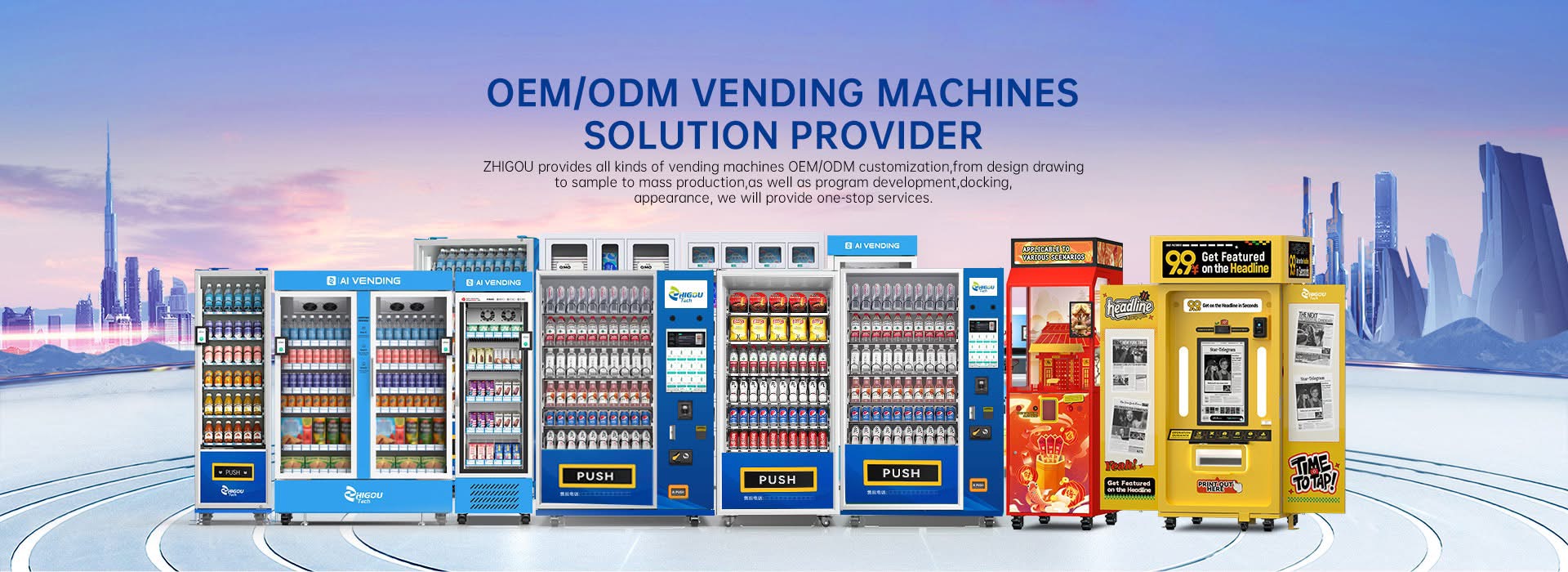
To create a profitable automated retail model, it is necessary to skillfully balance inventory turnover rate and gross profit margin. Many novice vending machine operators tend to fall into two common financial traps: one is to only stock traditional beverages with high turnover rate but low profit margin. Although the transaction volume is considerable, the net profit after deducting venue commissions and replenishment labor costs is negligible; the other is to stock all high-profit specialty products, which remain on the shelves for several weeks, occupying operating funds and causing cash flow stagnation.To achieve sustainable financial performance, professional route managers will adopt data-driven shelf display strategies, combining best selling vending machine items with high-profit margin profit drivers. This comprehensive selection guide details the operational indicators, core product proportions, vertical industry-specific shelf display diagrams, and mathematical investment portfolio models required to optimize the inventory mix in different business locations.
Strategic Comparison of Inventory Performance Metrics Across Core Categories
Effective vending machine product selection involves more than comparing purchase and selling prices. Operators should assess each product category across four dimensions: gross profit margin, sales velocity, shelf-life stability, and restocking requirements.
| Product Category | Indicative Gross Margin | Sales Velocity | Shelf-Life Considerations | Primary Role |
|---|---|---|---|---|
| Bottled water and soft drinks | 35%–50% | Often high | Generally long | Attract regular purchases |
| Energy and functional drinks | 55%–70% | Medium to high | Generally long | Combine sales volume and margin |
| Salty and sweet snacks | 45%–60% | Often high | Varies by product | Encourage frequent purchases |
| Fresh food, meals, and dairy | 65%–85% | Location-dependent | Often short | Meet immediate food needs |
| Frozen desserts and ice cream | 60%–80% | Seasonal and location-dependent | Depends on storage and packaging | Capture impulse purchases |
| Personal care and selected convenience products | 70%–90% | Often lower or irregular | Generally long | Serve specific or urgent needs |
These figures are illustrative estimates from the original draft, not verified industry-wide benchmarks. Actual margins and turnover vary by supplier, location, pricing, and operating costs.
A useful product mix combines categories that attract frequent purchases with products that generate stronger gross profit per sale. The ideal balance depends on the people using the machine, their purchasing habits, and the alternatives available nearby.
1. Understanding the Difference Between High-Turnover and High-Margin Products
High-turnover products are items that sell frequently. Familiar bottled water, popular soft drinks, energy drinks, and established snack brands often fall into this category. Although their margins may be relatively modest, consistent demand can generate regular cash flow and make restocking more predictable.
These products can also attract customers who might otherwise walk past a vending machine. For operators, maintaining availability of popular items helps reduce missed sales and provides a reliable baseline for evaluating other products.
By contrast, high margin vending machine products generate a larger gross profit relative to their cost. Specialty beverages, premium snacks, protein products, selected convenience items, and certain frozen desserts may fit this category, depending on purchase costs and local selling prices.
Their commercial value comes from the additional profit earned per transaction. However, a high margin does not automatically mean high profitability. Products that sell slowly can occupy valuable machine space, remain in inventory for too long, or expire before they are purchased.
The goal is therefore to combine both types of products rather than favoring one category exclusively.
2. Choosing the Right Product Mix for Different Locations
The best product mix depends on the venue's customer profile, dwell time, purchasing habits, and access to alternative retailers. A strategy that works in a busy transit hub may not perform equally well in an office building or factory.
For example, transit stations and shopping malls may benefit from a broad selection of recognizable drinks and snacks because customers often make quick purchasing decisions. Offices may support a more balanced selection that includes coffee, healthier snacks, and convenient meal options. Factories and residential facilities with limited nearby retail access may justify a wider range of food and everyday essentials.
The following models provide starting points for planning machine space:
| Product Mix Model | High-Turnover Allocation | High-Margin Allocation | Potential Locations |
|---|---|---|---|
| Velocity-focused | 60%–70% | 30%–40% | Transit hubs and busy malls |
| Balanced | Around 50% | Around 50% | Corporate offices |
| Margin-focused | 30%–40% | 60%–70% | Selected factories and residential facilities |
These percentages are illustrative planning models, not universal rules. Operators should adjust the allocation according to actual sales data, product availability, customer preferences, and expiration risk.
A practical vending machine product selection strategy starts with a small range of proven products, then gradually expands into specialty categories. This approach helps operators test demand without committing too much capital to unproven inventory.
3. Optimizing Product Placement by Sales and Profit Contribution
Product placement should reflect both how frequently an item sells and how much gross profit it contributes. A high-volume product may deserve more space because frequent stockouts lead to missed sales. A high-margin product may also deserve additional space if it sells consistently and contributes meaningfully to overall profit.
Operators can group products into four performance categories:
High sales, high margin: Prioritize availability and consider allocating additional space to products with consistent demand.
High sales, low margin: Maintain sufficient stock to meet regular demand without allowing these products to crowd out more profitable options.
Low sales, high margin: Test smaller quantities, review pricing, and monitor whether the product's margin justifies the space it occupies.
Low sales, low margin: Consider replacing these products with alternatives that better match customer demand.
This method turns product placement into an ongoing decision rather than a one-time setup task. Reviewing sales and margin together helps operators identify which products deserve more space, which need further testing, and which should be discontinued.
4. Improving Vending Machine Inventory Management
Effective vending machine inventory management helps prevent stockouts, reduce waste, and avoid tying up cash in slow-moving products. Operators should evaluate inventory using actual sales performance rather than relying only on intuition or general market trends.
A structured inventory review should consider several factors. Customer demographics help identify relevant products, while dwell time and access to nearby shops indicate how urgently customers may need convenient purchases. Storage conditions must also match the products being stocked, especially for refrigerated or frozen items.
Shelf-life management is equally important. Products with short expiration periods should be stocked conservatively until demand becomes predictable. Applying first-in, first-out (FIFO) rotation helps ensure that older stock is sold before newer stock, where appropriate.
During each inventory review, operators should check:
Customer demand: Are the products suited to the people who use the machine?
Sales velocity: How quickly does each item sell, and how often does it run out?
Shelf life: Is there enough time to sell the remaining inventory before expiration?
Pricing and margin: Does the selling price cover product cost and contribute enough gross profit?
Restocking efficiency: Can the product be replenished without creating excessive labor or transportation costs?
These checks make inventory decisions more consistent and help operators identify opportunities to improve product availability and profitability.
5. Using Sales Data to Identify Best-Selling Vending Machine Items
Identifying best selling vending machine items requires reviewing performance at the individual product level. Popular products in one location may perform poorly in another because customer demographics, purchasing occasions, price sensitivity, and competing retailers differ.
Operators should compare sales quantity, gross profit contribution, stockout frequency, and waste. A product with high sales volume but frequent stockouts may need additional space or more frequent replenishment. A product with a high margin but low sales volume may need a different placement, a price review, or a smaller test quantity.
Sales data can also reveal patterns by time of day or season. Cold drinks may perform better during warmer months, while certain snacks and meals may see higher demand during particular shifts or breaks. Reviewing these patterns helps operators adjust stock levels to actual demand.
Rather than immediately replacing every slow-moving item, test changes systematically. Introduce a limited quantity of a new product, monitor its performance over a defined period, and compare its results with those of existing products. This reduces the risk of making inventory decisions based on short-term fluctuations.
6. Conducting a Product Selection and Inventory Audit
Before launching a new location or changing an existing product mix, operators should complete a structured audit. This process helps ensure that products fit the customer base, machine configuration, and operating requirements.
The audit should include customer profiling, competitor checks, storage requirements, shelf-life planning, and pricing analysis. Operators should also confirm that the machine supports the required product dimensions, packaging, and temperature conditions.
For refrigerated and frozen goods, verify that the equipment can maintain the product manufacturer's specified storage conditions. For all categories, compare wholesale costs with realistic selling prices and account for location commissions, payment fees, restocking labor, and expected waste.
Review the audit results regularly after launch. Initial assumptions should be updated as actual sales data becomes available, allowing the product mix to evolve with customer demand.
7. Maximizing Inventory Performance With Smart Vending Equipment
The right equipment can make product selection and inventory management easier, particularly when operators sell a wide range of products or manage multiple locations. Adjustable shelves, suitable dispensing mechanisms, clear product displays, and appropriate temperature-control options can help accommodate different product categories.
Zhigou Technology develops and manufactures intelligent vending equipment for a range of unattended retail applications. Depending on the model, operators can evaluate features such as configurable product layouts, touchscreen displays, payment options, and remote management capabilities.
For operators seeking to improve vending machine inventory management, it is important to confirm which data and monitoring functions are supported by the specific model. Sales reporting, inventory visibility, and remote alerts can help operators identify products that need replenishment or further review, but the availability of these functions should be verified before purchase.
Choosing equipment that fits the product range and operating environment provides a practical foundation for refining inventory decisions over time.
Frequently Asked Questions
What are the most profitable products to sell in a vending machine?
Profitability depends on wholesale cost, selling price, demand, shelf life, and operating expenses. Specialty beverages, premium snacks, and selected convenience products may generate higher margins, but operators should compare gross profit contribution with actual sales velocity before allocating more space.
How often should vending machine inventory be reviewed?
Review sales and stock levels regularly, with a more comprehensive product performance assessment at least monthly as a starting point. High-volume or perishable products may require more frequent checks, while the review schedule should reflect sales patterns and expiration risk.
How can operators reduce vending machine inventory waste?
Start with conservative quantities for products with uncertain demand, rotate stock appropriately, and monitor expiration dates. Use sales records to adjust future orders and avoid replenishing slow-moving items at the same rate as consistently popular products.
How can operators find the best selling vending machine items for a new location?
Start by researching the customer profile, nearby competitors, and likely purchasing occasions. Introduce a manageable selection, track product-level sales, and refine the mix as reliable performance data becomes available.
Conclusion
Successful vending operations require a balance between products that sell frequently and products that generate stronger gross profit. A structured vending machine product selection strategy helps operators build this balance by considering customer demand, product margins, shelf life, and machine capacity.
By combining data-driven vending machine inventory management with regular product reviews, operators can identify high margin vending machine products, maintain reliable stock of best selling vending machine items, and make better-informed decisions about how to allocate valuable machine space. The most effective product mix is the one supported by actual location performance, not assumptions about what should sell.