Executive Summary:
Operating a 24/7 gym requires balancing member convenience, food safety, and loss prevention during unstaffed hours. Selecting the right unattended retail solution is not about finding a generic "smart" machine, but matching equipment formats to your club’s real traffic patterns, product mix, and maintenance capacities. For most small to mid-sized facilities, starting with a compact AI smart cooler pilot offers the highest ROI with minimal operational risk before scaling to larger micro-markets.
A 24/7 gym needs more than a refrigerator with a payment terminal. The right unattended retail solutions must fit member traffic, staff coverage, product safety, and the gym vending machine operating model. The right smart cooler must keep drinks and ready-to-eat products at the required temperature, identify what a member takes, authorize payment without staff at the counter, protect against shrinkage, and alert an operator when the unit needs attention. It also has to fit the gym’s floor plan, connectivity, product mix, and local food-safety responsibilities.
For a small or mid-sized fitness facility, a compact smart cooler is often easier to pilot than a full micro-market. A vending machine for gym locations should be selected around the site’s real traffic and service capacity, rather than around a generic feature list. A large club with sustained traffic may eventually justify a kiosk, open shelves, or a hybrid layout. The decision should follow the site’s operating conditions rather than a generic claim that one format is always better.
This guide explains how to compare the options, specify the equipment, and test the operating plan before installation. It uses published supplier and industry guidance as reference material, but it does not claim that any supplier’s product, pricing, or compliance package applies in every country.
## Start with the gym’s actual operating pattern
“Open 24 hours” does not mean that every hour has the same demand. Record member entry by hour, staffed and unstaffed periods, class schedules, nearby food options, and the times when members are most likely to want hydration or recovery products. A gym with a strong 5 a.m. to 7 a.m. audience may need a different assortment and replenishment schedule from a club whose traffic peaks after work.
Map the proposed location before comparing machines. Measure the available width, depth, door swing, queue space, ceiling height, ventilation clearance, electrical outlet, and cellular or Wi-Fi signal. Keep the cooler away from steam, direct sunlight, cleaning equipment, and locations where a swinging door or dropped weight could cause damage. If members must pass through a narrow corridor, a fast single-unit checkout may be safer than an open market with a queue.
The site assessment should also identify who can respond when an alert arrives. If the operator is several hours away, remote temperature and sales monitoring become essential. If staff are present only during the day, write down the overnight process for a failed payment, an open-door alert, a cooling fault, and a member requesting a refund.
## Smart cooler, traditional vending machine, or vending machine for gym use?
A traditional spiral vending machine offers controlled dispensing and a familiar purchase flow. For a gym vending machine, this format can be practical when the assortment is stable and the operator wants simple stock control. It can be suitable for sealed drinks, bars, and packaged snacks when the assortment is stable and the site needs a compact footprint. It is less flexible when members want to inspect a protein shake, compare nutritional information, or buy several items in one visit.
A smart cooler provides a refrigerator-style browsing experience in a self-contained cabinet. Depending on its design, the member may authenticate with a card, mobile wallet, QR code, or app, open the door, select items, and receive an automated charge. Camera-based or sensor-based identification can reduce the need for individual spirals, but the operator must understand how the system handles an item returned to the shelf, a product hidden behind another product, or a transaction interrupted by a network failure.
A micro-market gives customers more shelves, coolers, and choice, usually with a kiosk or self-checkout station. It is one of several unattended retail solutions, alongside a controlled smart cooler or a conventional vending machine for gym facilities. Industry guidance describes it as an unattended retail setting in which customers select products and complete checkout themselves. It can work in a large, high-traffic club with dedicated space and active replenishment. It also creates more exposed inventory, more cleaning surfaces, and a larger shrinkage-control task.
| Site condition | Usually worth evaluating first | Why |
| One small training area, limited floor space | Smart cooler or compact refrigerated vending machine | Self-contained and easier to pilot |
| High traffic with a wide lobby and many product categories | Micro-market or hybrid layout | More room for variety and browsing |
| Long unstaffed periods and limited oversight | Controlled-access smart cooler | Access records and automated billing can reduce exposure |
| Mostly bottled drinks and fixed-price snacks | Traditional vending or smart cooler | Simple assortment and replenishment |
| Fresh meals, shakes, and products with detailed labels | Smart cooler with information display and temperature logging | Better product visibility and cold-chain records |
This table is a starting point, not a sales forecast. Confirm demand with a pilot and actual transaction data.
## Specify the product mix before selecting capacity
Gym customers may buy water, electrolyte drinks, energy drinks, protein shakes, bars, ready-to-eat meals, and recovery products. These categories differ in size, shelf life, margin, temperature requirement, and handling risk. A cooler designed for cans may not provide the shelf depth, loading access, or airflow needed for larger meal containers.
Create a trial plan with a limited number of stock keeping units. For each product, record the package dimensions, net quantity, expiry or best-before date, required storage condition, selling price, cost, and expected daily movement. Keep the initial assortment narrow enough to identify what sells. A large assortment can make a new installation look impressive while hiding slow-moving stock and waste.
For fresh or prepared foods, ask who is responsible for preparation, labeling, allergen information, expiry control, and withdrawal of unsold items. A screen that displays nutrition or ingredients can improve the member experience, but it does not replace the operator’s legal food-labeling and hygiene duties. Requirements differ by jurisdiction; obtain local advice for the actual product and location.
A practical first layout might reserve the highest-access shelves for water and sports drinks, a visible middle zone for protein shakes and bars, and a smaller section for meals that need tighter date control. Use clear planograms so a restocker can see missing facings quickly. Do not fill every shelf on day one if the product will block airflow or create unnecessary expiry exposure.
## Temperature control and food-safety evidence
Refrigeration is a core selection criterion, not an optional feature. Ask the supplier for the operating temperature range, sensor location, alarm logic, recovery behavior after a door remains open, and what happens after a power or network interruption. Confirm whether the display shows the current temperature only or also stores a time-stamped history.
A connected temperature system can record trends in a cloud dashboard and send alerts when a threshold is exceeded. This supports internal quality procedures and gives the operator an evidence trail, but it does not guarantee food safety by itself. The cooler still needs correct loading, clean surfaces, adequate airflow, functioning seals, and a documented response when an alarm appears.
Define the response matrix before installation:
- Who receives the alert, and during what hours?
- How quickly must someone inspect the unit?
- When should sales of perishable products be suspended?
- Who decides whether affected stock is discarded?
- How are the incident, temperature history, and corrective action recorded?
Do not promise members that a product is safe merely because the machine has an AI camera or a temperature sensor. Technology helps monitor the process; it does not replace local food-safety procedures or trained handling.
## Payment and member access
A 24/7 gym usually needs cashless payment. At minimum, evaluate contactless cards and mobile wallets used by the target market. If the cooler requires an app or member account, offer a clear fallback for visitors and members whose phone battery is low. A payment method that works during staffed hours but fails overnight is an operating problem, not a minor user-interface issue.
Ask how the system handles authorization, final capture, refunds, duplicate attempts, and a member who opens the door but changes their mind. For camera-based systems, request a written explanation of how an item is matched to the basket and how uncertain events are reviewed. For RFID systems, ask whether every product requires a tag and how tag replacement is managed.
Access control is especially relevant when a club is unstaffed. Options include a payment card tap, a gym membership credential, a QR code, or an app-based identity check. Decide whether any authenticated member can purchase or whether the cooler must be limited to active members. Privacy notices, data retention, and camera placement should be reviewed with local counsel and the gym’s privacy policy.
Run a full test with a real product mix:
1. Open the cooler and select one item.
2. Select several items in one visit.
3. Return an item to the shelf.
4. Complete a payment and verify the receipt.
5. Simulate a failed connection or declined card.
6. Request a refund and check how the member is informed.
7. Compare the cooler record with the payment settlement and inventory report.
Do not approve a rollout based only on a demonstration video.
## Security and shrinkage controls
A smart cooler is still an unattended retail point. The same security questions apply to any vending machine for gym use, especially when members can shop during unstaffed hours. Place it in a visible area with adequate lighting and, where lawful, camera coverage. Make sure the gym understands which footage it owns, how long it retains it, and who can access it. The cooler’s access log and payment record should be time-aligned with the gym’s incident process.
Ask the supplier what happens if a door is forced, held open, or repeatedly reopened. Confirm whether the system can lock the door, pause sales, and send an alert. Review chargeback evidence: can the operator show the authenticated user, timestamp, item record, and final payment result without exposing unnecessary personal data?
Shrinkage should be measured rather than assumed. Reconcile opening inventory plus deliveries against sold, returned, expired, damaged, and closing units. A simple variance report by product category can show whether losses are concentrated in high-value shakes, small bars, or multi-item baskets. Do not hide shrinkage inside a general “machine error” line; the corrective action depends on the cause.
## Replenishment, cleaning, and serviceability
The best cooler for a gym is one that can be serviced on the route you actually operate. A reliable gym vending machine program depends on replenishment access, parts availability, and a documented response plan. Ask how shelves are removed, how quickly a restocker can load the unit, whether the condenser is accessible for cleaning, and whether commonly replaced parts are available in the destination country.
Set a replenishment trigger for each product category. High-volume water may need a different minimum level from fresh meals with a short shelf life. The operator should see stock, sales, expiry dates, temperature alerts, and machine health in one dashboard or through clearly connected systems. If several portals are required, document who checks each one.
Cleaning needs a written schedule covering handles, touchscreens, shelves, seals, drip areas, and the floor around the unit. A cooler positioned beside a training area will encounter sweat, dust, and cleaning chemicals. Confirm which products and methods are permitted by the manufacturer, and keep a simple completion record.
Ask for the service plan in operational terms: remote diagnostics, response hours, escalation path, spare-parts availability, warranty exclusions, and the expected process if refrigeration fails. An inexpensive cabinet with no realistic repair route can cost more in lost sales and discarded stock than a better-supported unit.
## Site readiness checklist
Before signing an order, confirm the following with the gym and supplier:
| Area | Questions to answer |
| Space | Is there enough clearance for loading, ventilation, and member movement? |
| Power | Is the outlet suitable, protected, and available continuously? |
| Connectivity | Is cellular or Wi-Fi coverage stable where the cooler will stand? |
| Products | Are package sizes, temperature needs, labels, and expiry controls documented? |
| Payment | Which cards, wallets, refunds, and fallback methods are supported? |
| Access | Who may open the cabinet, and how are credentials revoked? |
| Security | What alerts, logs, cameras, and chargeback evidence are available? |
| Monitoring | Who receives temperature, door, stock, and payment alerts after hours? |
| Service | Where are parts and technicians located, and what response time is promised? |
| Commercial terms | Who owns the hardware, software account, data, and inventory? |
| Compliance | Which local food, privacy, electrical, and accessibility rules apply? |
Get the answers in writing. Marketing terms such as “AI,” “cashless,” or “fully automated” do not define the actual responsibilities of the gym or operator.
## Pilot before expanding
A pilot should be long enough to include normal busy periods, quiet periods, a restock cycle, and at least one planned maintenance check. Start with one cooler in the most visible suitable location. Agree on the success measures before launch:
- completed transactions and average basket value;
- payment approval and failure events;
- stock variance and expired products;
- temperature alerts and response time;
- member support requests and refunds;
- labor time for replenishment and cleaning;
- equipment downtime and service response.
Use the pilot to change the assortment, shelf layout, pricing, and alert rules. Do not extrapolate a single strong weekend into an annual forecast. A product can sell well at a launch event and then slow when the novelty disappears.
For a simple contribution check, subtract product cost, payment charges, spoilage, site commission, replenishment labor, connectivity, software, repairs, and an allowance for shrinkage from sales. Use actual pilot results where available. Any projected return that omits these items is a gross-margin illustration, not a business case.
## How Zhigou can support an unattended gym vending machine plan
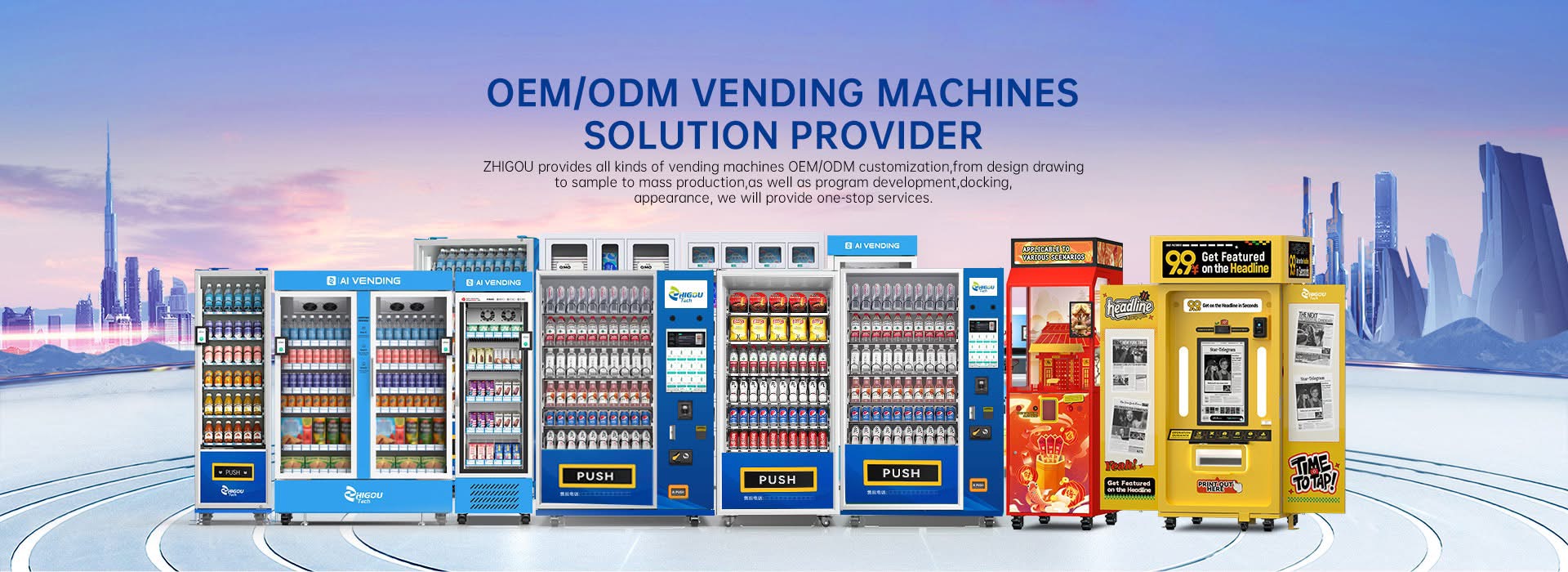
[Zhigou Tech](https://zhigouvendingmachine.com/) offers vending equipment categories including spiral machines, AI vision smart cabinets, and payment-module customization. These options can be discussed as unattended retail solutions against the gym’s product mix, target country, access method, and service plan. The appropriate configuration depends on the actual cabinet model, payment integration, refrigeration specification, and local support arrangement.
When requesting a proposal, provide the gym’s opening hours, unstaffed hours, floor dimensions, target products, expected basket range, preferred payment methods, network conditions, and replenishment plan. Ask for a written specification covering temperature monitoring, door control, transaction records, data access, warranty, and service response. This makes the proposal reviewable and prevents a general smart-cooler label from substituting for an operating plan.
## Frequently asked questions
### Is a smart cooler better than a gym vending machine or micro-market?
Not automatically. A smart cooler usually fits a smaller footprint and can provide tighter access control with less setup. A micro-market can support more products and browsing in a large, high-traffic club, but it requires more space, auditing, cleaning, and shrinkage control. Compare the site’s traffic and staffing pattern before choosing.
### Can a smart cooler safely sell protein shakes and prepared meals?
It can be designed for refrigerated products, but safe operation depends on the equipment, loading process, temperature monitoring, labeling, shelf-life control, and local requirements. Ask for temperature records and an incident procedure; do not rely on the word “smart” as a food-safety claim.
### Should the gym use member-only access?
Member-only access can reduce unknown-user risk and simplify support, but it may exclude guests and limit sales. Decide based on the gym’s commercial policy, privacy obligations, and the payment system’s identity capabilities.
### What is the most important question to ask a supplier?
Ask what happens when a member opens the cooler, the network fails, the temperature rises, an item is returned, or the payment is disputed. The quality of those exception workflows often matters more than the feature list.
### How many coolers should a new gym install?
Start with the smallest pilot that can test the main demand zones and product categories. Add capacity after the operator has verified transaction data, replenishment time, temperature performance, and shrinkage. A written pilot plan is more reliable than a generic machine-count recommendation.