For years, items from the conventional vending machine were purchased in the same manner. You approached a large metal box, whacked a few keys on a brittle touch-panel, inserted coins or crumpled dollar bills and watched a metal spiral slowly push a bag of chips forward, only hoping that it wouldn't get hung up mid-way down. The route operators spent hours each week driving around town on set routes, estimating what was in the machine, how much was in the machine, and if the refrigerator compressor stopped working over the weekend.
Today, those passive metal boxes are being replaced by an AI vending machine network, powered by artificial intelligence, precision sensor technology and cloud based software platforms. Rather than simply mechanical coils and a "guess and check" mentality, each AI powered vending machine is equipped with computer vision, shelf weight sensors, and automated data analytics for a quicker and more friendly shopping experience for the average consumer, while simultaneously providing a more lucrative and predictable bottom line for vending machine owners.
1. Shopping Like a Real Store with a Grab-and-Go AI Vending Machine
One of the most prominent changes for the average consumer is the speedy arrival of open shelves with smart coolers and grab-and-go cabinets. Customers who have a touchless credit card, debit card or mobile wallet can unlock the glass door of an AI vending machine without entering a 3-digit product code on a keypad, instead. When the door opens, the shopper can roam around freely – pick up a fresh salad to read the nutrition label, grab a refreshing bottle of juice, pick up an item they changed their mind and put back the bag and just close the door and leave.
The easy-to-use customer experience comes from a series of hardware and software which are coordinated within the smart vending machines and not just one camera. Integrated wide-angle cameras support AI vision recognition, which identifies the appearance of the products, graphics on the packaging labels, and the position of the product on the shelf as it passes. Meanwhile, precision weight sensors (load cells) placed under each shelf precisely measured each gram of weight change to ensure that a product had been removed or returned. Edge computing software in the AI powered vending machine then checks both the visual and the weight input streams to create an accurate virtual shopping cart, and upon closing the door, it completes the order, processes the payment authorization and wraps up the settlement. As there are no metal spirals squeezing or dropping sensitive products, operators can safely stock fresh meals, glass bottles, sensitive bakery items and even fresh-cut flowers without concern for product damage or mechanical jamming.
2. Real-Time Inventory Tracking vs. AI Demand Forecasting
Traditional vending routes were frequently driven with a predetermined route, and the route driver would waste fuel and time in that process, only to realize that the vending cabinet was only lightly stocked. At the same time, another busy unit further away could have sold out on its best-selling energy drink or bottled water two days prior, depriving the business owner of much-needed revenue and irking everyday customers.
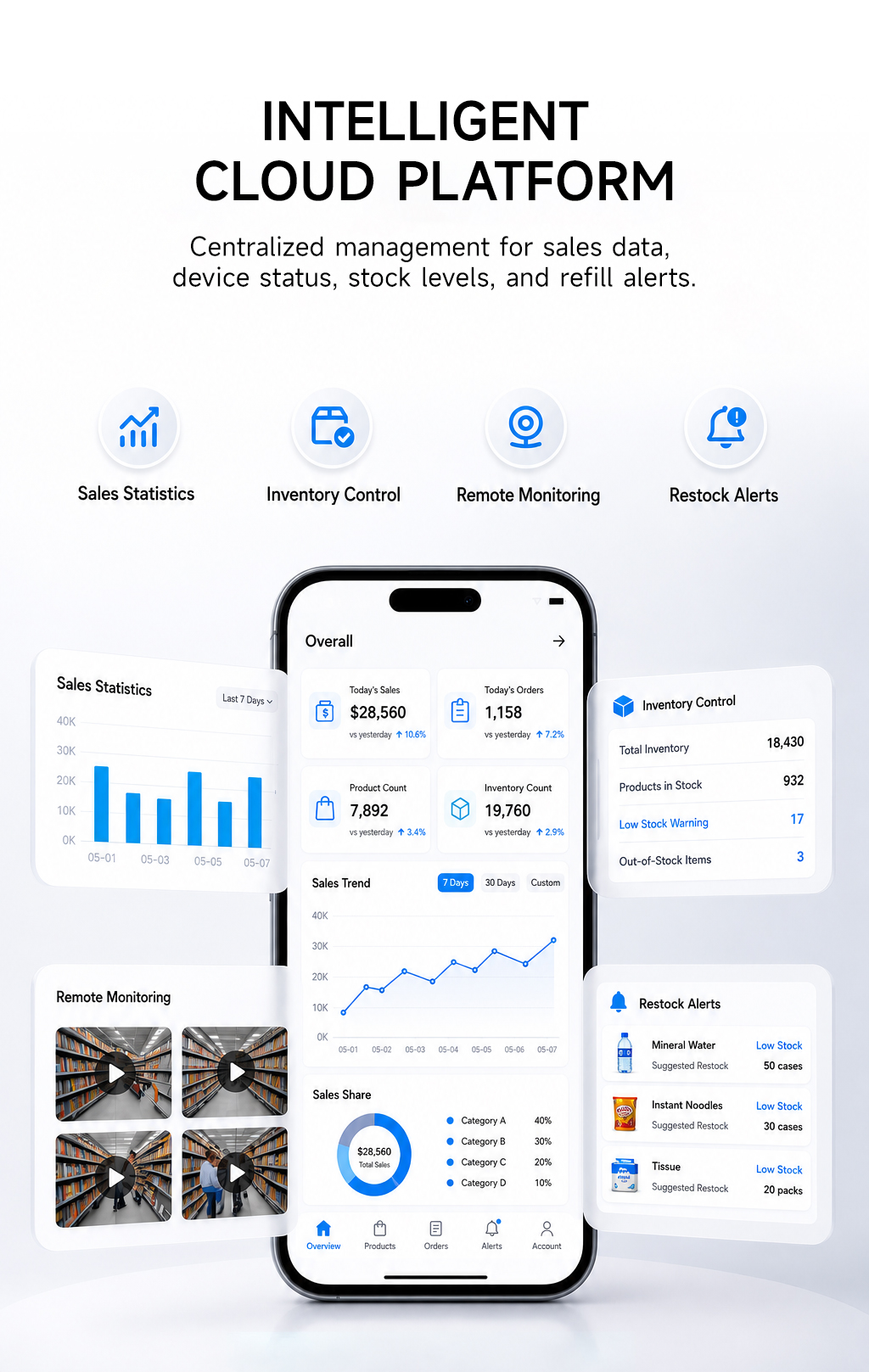
- Real-Time Inventory Tracking: Powered by onboard sensors and point-of-sale telemetry, cloud dashboards record every transaction and stock change inside each AI vending machine the moment it happens. Operators can check exact shelf counts across dozens or hundreds of locations from a laptop or smartphone and receive instant alerts whenever top-selling items drop below threshold levels.
- AI-Powered Demand Forecasting: Beyond simply counting remaining inventory, AI algorithms analyze historical sales patterns alongside location foot traffic, day-of-week habits, and seasonal weather shifts to predict future product demand for every smart vending machine.
This live tracking of stock coupled with predictive forecast means that operators don't need to make a wild guess tomorrow about what to put on delivery trucks. The software generates precise packing lists for the warehouses, it optimises delivery routes and recommends the most suitable route, ensuring the driver only delivers to the stores that are in need of it. This data-driven process can also save a tremendous amount of money on fuel expenses, waste hours of labor and prevent costly stock-outs and overstocked vending machines in AI smart vending machines fleets.
3. Smarter Pricing Rules and Less Food Waste
The financial risk of selling perishables with higher margins like fresh sandwiches, sushi boxes, yogurt parfaits, or pastries in a legacy cabinet was the risk that food would go bad. Although bright digital touchscreens and electronic shelf labels make the task of changing prices simple, automated pricing changes within an AI-powered vending machine rely on the rules and management tools programmed into the software by the operator.
With automated retail systems, business owners can set up customised promotion conditions that can be directly linked to the expiration dates, sales velocity or certain hours of the day, and clearly communicate the new prices on the digital shelf tags or on the touchscreen menus on each smart vending machine. For instance, if the food in a new lunch wrap is getting close to its sell by date in the late afternoon, the system can automatically bump up the discount to 30% to entice people to buy something for afternoon snack time before it is too late. Simple bundle promotions, including automatically lowering the price of a fresh muffin if it comes with a morning coffee, can also be configured to provide consumers with more value, while helping to secure profit margins and reduce wastage for operators.
4. IoT Remote Monitoring and AI Predictive Maintenance
When customers are hungry, the last thing they want is to walk up to an out-of-order unit, and if a customer doesn't notice a refrigeration unit has broken down, the operator's bottom line is hurt. Owners of businesses used to find out they had a broken cabinet only after receiving a call from a service hotline or a route driver when they arrived days later to pour hot beverages and collect spoiled food.
Modern AI smart vending machines are equipped with a combination of IoT (Internet of Things) remote monitoring and AI-based predictive maintenance systems that ensure the uptime of the machines. An AI vending machine continuously tracks internal cabinet temperature, power status and door seals, and can immediately alert mobile technicians when a door is propped open or electrical power has been lost. With the appropriate amount of data logging and historical machine use for each machine, AI data analysis takes it one step further by analyzing the historical performance trends to identify small mechanical drifts or issues before they become a complete failure. For example, if the refrigeration compressor is continually running longer cycles and is unable to maintain the target temperature, the system will flag the issue early and allow the technician to investigate the compressor, condenser coils or cooling units before the inventory is lost.
5. Traditional Machines vs. AI Smart Vending Machines at a Glance
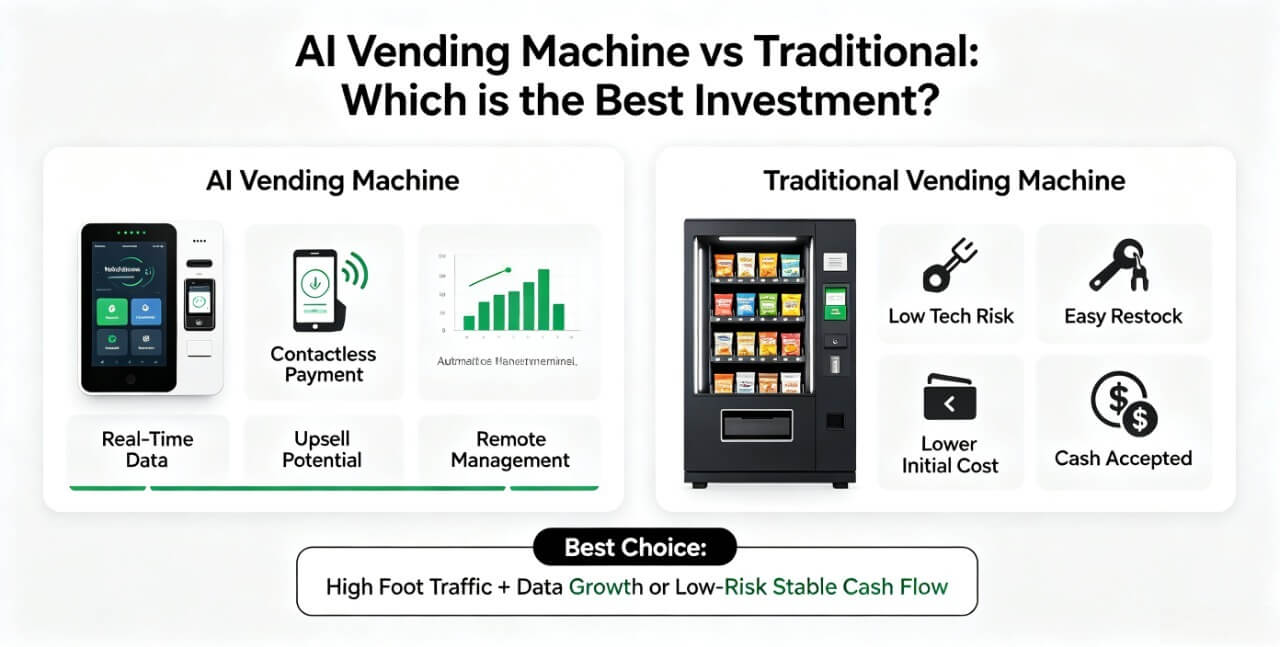
| Feature | Traditional Machines | AI Smart Vending Machines |
| How You Shop | Press buttons and buy one item at a time | Tap to unlock an AI vending machine, grab multiple items, and walk away |
| Customer Experience | Limited to preset keypad selections | Flexible, intuitive grab-and-go shopping |
| What They Sell | Mostly canned drinks, chips, and candy bars | Fresh meals, glass bottles, salads, flowers, and snacks |
| Inventory Management | Manual stock checks and basic sales records | Automated inventory tracking and AI demand analysis |
| Restocking | Drivers visit on a fixed schedule and guess stock | Real-time data and forecasts tell drivers what to bring |
| Pricing | Fixed paper price tags that rarely change | Digital displays on each smart vending machine supporting scheduled promos |
| Repairs | Fixed only after someone reports a breakdown | IoT alerts and predictive diagnostics catch issues early |
6. Bringing an AI Vending Machine Into Everyday Business
With greater need for 24/7 food and beverage options for corporate offices, fitness centers, hospitals, universities and transit hubs where the full-service cafeteria isn't an option, reliable smart hardware is crucial. Instead of working with aftermarket cameras, external card readers, and third-party sensors and adding them to legacy cabinets, increasingly operators opt for purpose built equipment that is built with integrated intelligence from the factory floor.
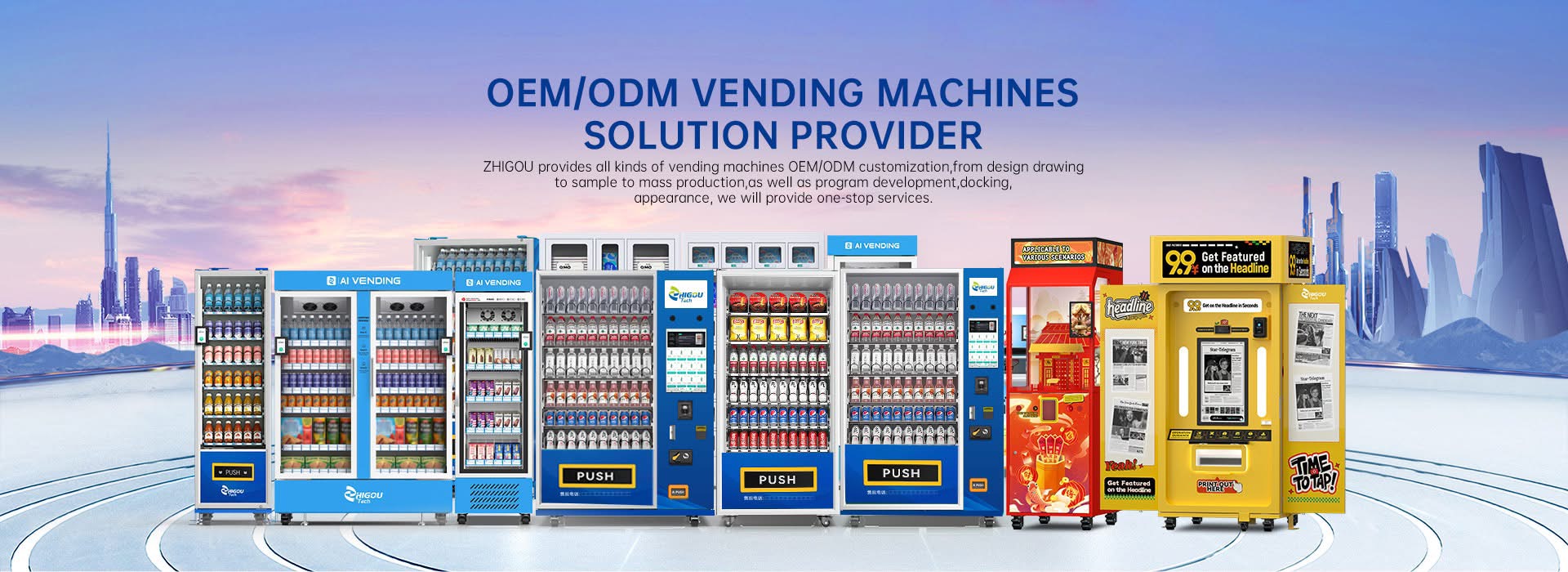
For instance, Xi'an Zhigou Intelligent Technology Co., Ltd. (Zhigou Tech) creates commercial AI grab-and-go smart cabinets, interactive touchscreen kiosks and precision temperature-controlled solutions that are engineered for reliability in everyday use. Every AI vending machine from Zhigou Tech is equipped with AI visual recognition and dual vision and gravity sensors to accurately verify multiple item purchases and enable quick and seamless cashless checkout. These AI smart vending machines are integrated with a centralized cloud management system, providing operators with real-time inventory management, temperature tracking, and immediate alerts for operations, making it significantly easier to start, operate, and expand modern self-service retail spaces.
Every AI vending machine includes integrated camera systems alongside the exact weight sensor under each shelf. Cameras detect product packaging and movement, and weight sensors ensure precise weight changes on the shelves, which means the system can build up your virtual shopping cart and process the payment settlement once the door is closed.