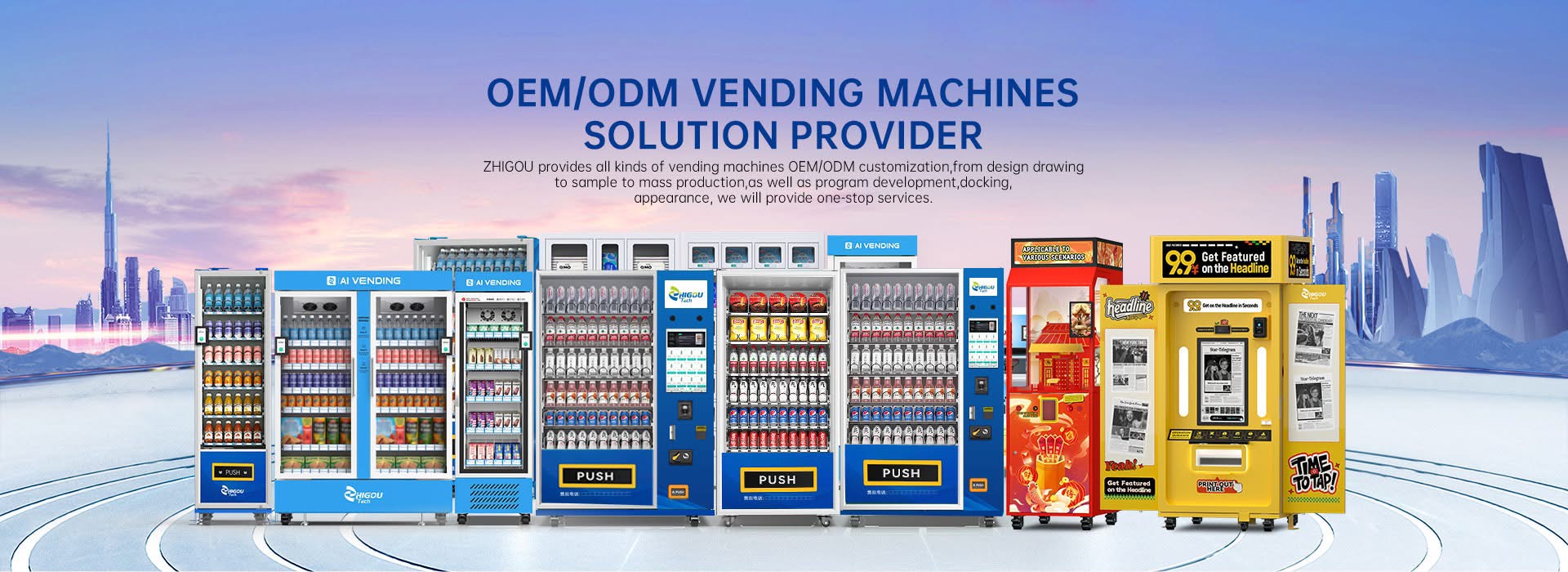
From parks to malls; schools to offices; gas stations to apartment buildings – you see vending machines all around you. We have all used these machines multiple times in our lives. However, have you ever pondered how a vending machine operates? By 2026, these devices will have developed into linked, automatic vending machine much beyond basic coin-operated dispensers. Let's examine the intriguing technology underneath contemporary vending machines and comprehend the entire process that enables your buy.
The Four Core Steps of Vending Machine Operation
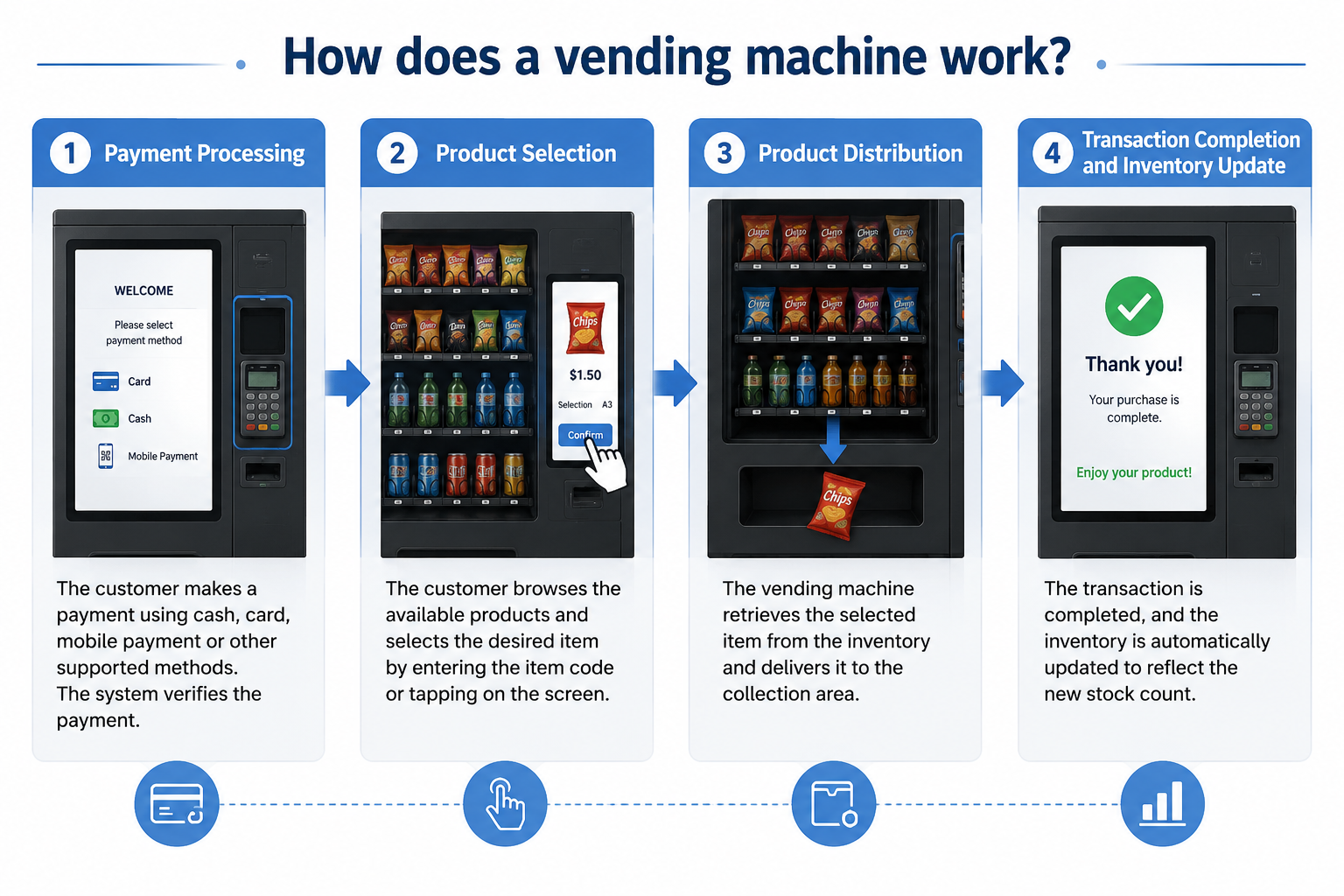
Each transaction of an automatic vending machine follows four basic steps. All commercial vending machines follow a unified industrial-level transaction closed-loop logic, and no manual intervention is required throughout the process. It is divided into four standard procedures. Self vending machines can send sales, inventory, and fault data to the operator in real time, transforming the previous mechanical process into a data-driven retail experience.
Step 1: Payment Processing
Today's personalised vending machines accept a variety of payment methods, including coins, banknotes, cards, and mobile wallets. This flexibility is critical in 2026, when cashless payments have become the norm for smart vending operations.
1. Coin Recognition: When you insert a coin, the self-vending machine’s coin mechanism kicks into action. It doesn’t just blindly accept any circular piece of metal—far from it. The automatic vending machine analyzes three key properties of a coin to authenticate it: Thickness Diameter Material Composition (using electromagnets to detect the type of metal). For example, a U.S. quarter has a specific size, thickness, and ridges on its edge, all of which are verified by the machine. If a coin doesn’t meet these standards, it’s spit back into the coin return slot. Clever, right? 2. Bill Recognition: Bills are a bit trickier than coins. Intelligent vending machines use advanced optical sensors and cameras to identify the authenticity and value of paper currency. When you insert a dollar bill, here’s what happens: Scanning the Bill: The machine illuminates the bill and scans it for specific patterns and markings that denote its value. This includes security features like watermarks and magnetic ink.
2. Authentication: Bills are cross-verified against pre-programmed criteria, including their size, color, and placement of security markers. If it’s slightly crumpled or too worn, some vending machines might reject it. Older machines relied on magnetic sensors to detect the special ink used in currency. But modern automatic vending machines? They step it up with high-definition cameras for increased accuracy. That’s why sometimes new bills, introduced after a redesign, won’t be accepted until the machine is updated. If the bill passes all checks, the self vending machines accepts it. Otherwise, it’s ejected back to you.
3. Card Payments and Contactless Options: With cashless payments becoming increasingly popular, automatic vending machines come equipped with card readers. Here’s how it works: Insertion or Tap: For contactless cards, RFID (Radio Frequency Identification) technology scans your card. For chip-and-PIN cards, the chip is read once inserted.
Transaction Validation: The card's data is encrypted and transmitted to the payment processor, which confirms the transaction with your bank.
Approval or Decline: Once the transaction has been approved, your snack (or drink) will be sent to you.
Zhigou vending machines now allow payments using mobile wallets such as Apple Pay or Google Pay, adding even more convenience.
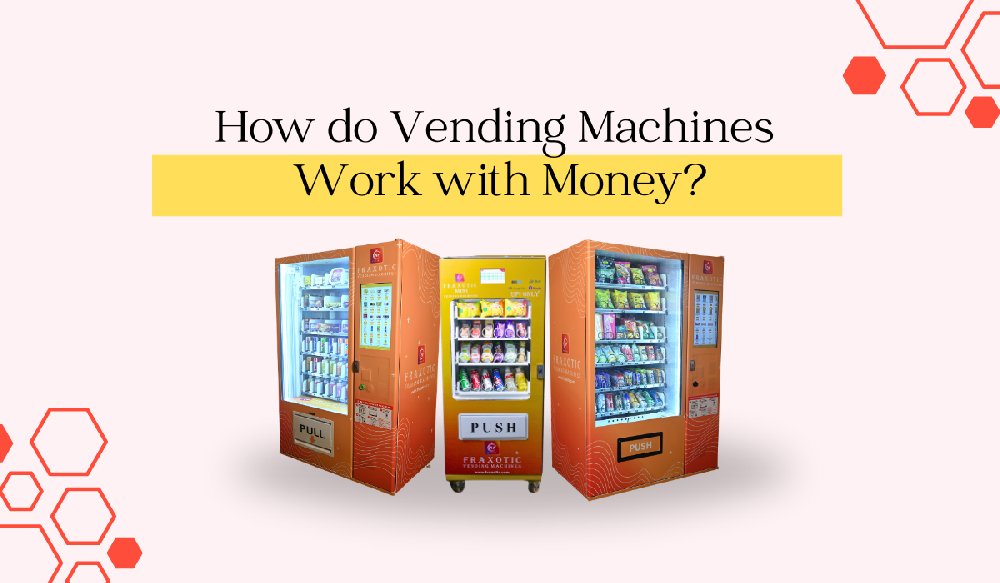
Step 2: Product Selection
The keypad or touchscreen does much more than display product options. When you make a selection, it communicates the product code to the machine's internal computer, which activates the appropriate dispensing mechanism in the associated slot.
Modern automatic vending machines employ computerized selection systems that can monitor client preferences, display real-time inventory, and even recommend alternatives when things are out of stock.
Step 3: Product Distribution
The distribution mechanism varies depending on the type of product. For snacks, the most typical system is a spring/coil mechanism. When actuated, the coil turns, pushing the product ahead until it falls into the recycling container.
Fragile things, such as bottles or glass containers, will be transported using a softer approach, such as elevators or robotic arms, to prevent damage. Some personalised vending machines can even make products on the spot, such as fresh coffee, rather than only dispensing pre-packaged goods.
Step 4: Transaction Completion and Inventory Update
Modern automatic vending machines use infrared sensors or similar devices in the shipping trays to verify that the goods have been successfully dispatched. If the sensors do not detect the goods, the machine can retry the shipment or offer a refund.
The self vending machines can automatically update the inventory level and transmit real-time data to the backend system, enabling the operator to track purchasing patterns, product performance, and the best replenishment plan.
The Smart Revolution: Connected Vending in 2026
The biggest technological upgrade of automatic vending machines is the realization of intelligent connectivity. By 2026, the new generation of intelligent vending machines will no longer be standalone single devices. They will be fully networked and synchronize various operational data with the back-end system in real time, including remaining inventory, real-time sales, equipment operation status, fault alerts, and transaction records.
Relying on the data connectivity capability, operators can remotely manage the personalised vending machine, view the equipment status at any time, accurately grasp the shortage situation, and reasonably arrange replenishment, significantly reducing the cost of manual inspection. At the same time, by analyzing sales data and user consumption habits, operators can clearly understand popular products, user preferences, and the effectiveness of promotional activities, and adjust the sold products, pricing, and service methods as needed, saying goodbye to the traditional problem of blind stocking and inefficient operation.
Beyond Snacks: The Versatility of automatic Vending machines
Snacks and beverages are classic categories of automatic vending machines, but they are no longer the only ones. Nowadays, with structural and technological optimization, intelligent vending machines support a wide range of products, covering tickets, freshly ground coffee, personal hygiene products, digital accessories, and many other categories, suitable for various usage scenarios.
The equipment is equipped with adaptive delivery, flexible protection, precise temperature control, and intelligent recognition technologies, which can not only sell standard goods in a regular manner but also safely transport fragile items, freshly made products, and precise small items, effectively ensuring the integrity of the goods, making the personalised vending machine more diverse, flexible, and practical.
Conclusion
Nowadays, automatic vending machines have upgraded from traditional mechanical selling tools to intelligent retail terminals equipped with the Internet of Things, artificial intelligence, and sensors. The new equipment integrates functions such as self-service selling, intelligent operation and maintenance, data statistics, and user analysis; it is lightweight, efficient, and highly adaptable, and is the core equipment of unmanned retail.
In 2026, cashless payment, cloud interconnection, and intelligent data operation have become standard features of self-service vending machines, continuously changing the consumption patterns of the public and the development model of the unmanned retail industry. Behind the simple self-service purchase is a mature and complete intelligent technology system, making automatic vending machines a convenient and widespread smart retail solution at present.
Reference
Kaur, J. (2026). How does a vending machine work? The complete 2026 guide.
M and P Vending. (2025, February 11). How does a vending machine really work? A look at the inner workings.
LaMarco, N. (n.d.). Step-by-step process of how a vending machine works.