The vending industry has always been shaped by technology. From simple coin-operated snack dispensers to advanced machines that recognize products with sensors, every decade has brought a new level of capability. Today, the conversation often comes down to traditional vs AI vending machines. Although they have different functions, both kinds are nonetheless useful for operators, companies, and clients. The true question is which is appropriate for a particular region, audience, and investment strategy rather than which is superior in absolute terms. We will discuss the features of each kind of vending machine in this blog post. We shall discuss the expenses, advantages, difficulties, and particular circumstances in which each variety excels. By the end, you will comprehend the commercial rationale behind selecting one model over another in addition to the technical distinctions. Along the way, we will also point to specific examples of vending solutions available today, from reliable snack and drink units to advanced AI Grab-and-Go Vending Machines designed for premium venues.
What Is a Traditional Vending Machine?
A traditional vending machine is a mechanical or electro-mechanical unit that dispenses products when a user inserts money or a payment card. These machines typically require regular manual restocking, physical cash handling, and limited data reporting.
Key Features of standard vending machine
· Fixed product display with limited customization
· Cash, coin, or basic card payment systems
· No real-time inventory tracking
· Manual restocking and maintenance required
· No customer behavior or foot traffic data
· Zero integration with retail analytics platforms
While reliable and widely deployed, automatic vending machines are limited in their ability to adapt to modern consumer demands or provide useful retail data analytics for business growth.
What Is an AI Vending Machine?
An AI vending machine is an autonomous retail store solution powered by computer vision AI retail technology, machine learning, and IoT sensors. Intelligent vending machine offers a cashierless, frictionless shopping experience where customers walk in, pick up products, and walk out — with payments processed automatically.
grab & go vending are part of a broader shift toward AI-powered smart retail systems that include everything from smart shelving to real-time inventory alerts. Brands like Zhigou are leading this revolution with cutting-edge AI store solutions for retailers across Asia, Europe, and beyond.
Key Features of AI Vending Machines
· Computer vision for product recognition and theft prevention
· Real-time inventory and vending machine monitoring system
· Personalized product recommendations using retail AI
· Seamless digital payment integration
· Rich vending machine data analytics for operational insights
· Remote management via AI vending software
· Integration with retail analytics software platforms
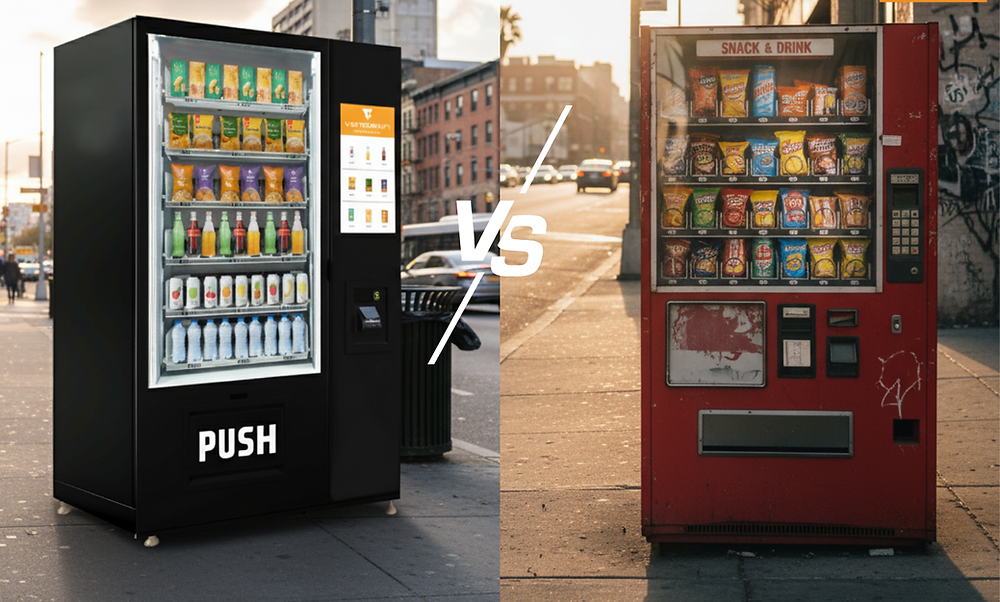
AI Vending Machines vs Traditional Vending Machines: Side-by-Side Comparison
Here’s a quick look at how these two types stack up across the most important retail metrics:
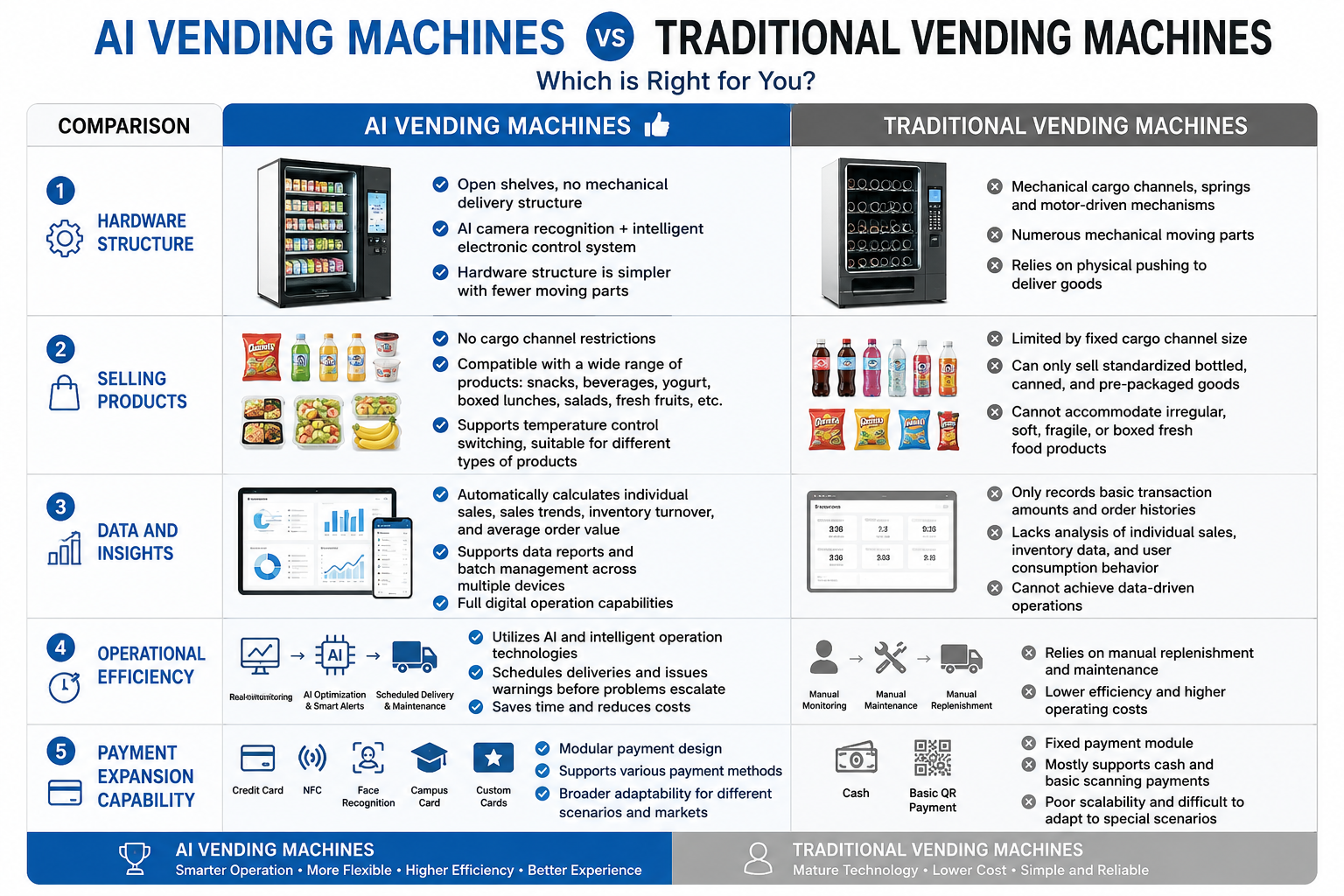
1. Hardware Structure
The automatic vending machine is centered around mechanical cargo channels, springs, and motor-driven mechanisms. It has numerous mechanical moving parts and relies on physical pushing to complete the delivery of goods. The AI-powered vending machine does not have a mechanical delivery structure. It mainly consists of open shelves, AI camera recognition components, and intelligent electronic control systems. The hardware structure is more concise, and there are fewer moving loss components.
2. Selling Products
The standard vending machine is limited by the fixed size of the cargo channels and can only sell standardized bottled, canned, and pre-packaged goods. It cannot accommodate irregular, soft, fragile, or boxed fresh food products. The AI vending machine for sale has no cargo channel restrictions and can be compatible with a wide range of products such as snacks, beverages, yogurt, boxed lunches, salads, and fresh fruits. AI-powered vending machine also supports temperature control switching and is suitable for selling different types of products at different temperatures.
3. Data and Insights
Traditional vending machines can only record basic transaction amounts and order histories, lacking the ability to analyze individual sales volume, inventory data, and user consumption behavior, and thus cannot achieve data-driven operations. Intelligent vending machines, on the other hand, can automatically calculate individual sales volume, sales trends, inventory turnover, and average order value, support the generation of data reports and batch management across multiple devices, and possess complete digital operation capabilities.
4. Operational Efficiency
Automatic retail operations mainly rely on manual replenishment and maintenance. AI-powered vending machine utilize retail operation intelligence and artificial intelligence labor optimization technologies to schedule deliveries and issue warnings before problems escalate, thereby saving time and costs.
5. Payment Expansion Capability
The payment module of standard vending machine is fixed, and most only support cash and basic scanning payments, resulting in poor scalability and difficulty in adapting to special scenarios such as overseas payments, customized card swiping, face recognition payments, etc. AI vending machine for sale adopt modular payment design, allowing for the expansion of various payment methods such as credit cards, NFC, face recognition, campus cards, and enterprise customized cards, providing broader adaptability.
Use Cases and Audiences
The real strength of comparing traditional and AI vending machines lies in understanding where each one fits best. Different audiences, venues, and operator goals call for different solutions.
Where Traditional Vending Machines Excel
Traditional units are best suited for stable circumstances with continuous demand for everyday products. Machines such as the Baked Goods Vending Machine and the Big Screen Ice Cream Vending Machine are frequently used in schools, gyms, and mid-sized companies. These establishments frequently emphasis price, dependability, and quick stocking above complex features. Customers in these places expect a straightforward shopping procedure and familiar products at a reasonable price.
Where AI Vending Machines Excel
AI-powered vending machines thrive in prime locations with a diverse audience and strong traffic. Airports, hospitals, and corporate campuses are excellent examples. A Frozen Vending Machine can cater to tourists looking for quality frozen foods on the fly, or an AI Cooler Vending Machine in an office tower can stock salads, wraps, and fresh alternatives to fulfill today's desire for healthier meals. These environments also encourage technology-driven experiences, with customers prioritizing speed, variety, and contactless purchases.
Which is right for you?
The selection of traditional vending machines and AI intelligent vending machines mainly depends on one's own budget, business goals, and layout planning of the locations. If your budget is limited and you are new to the automatic vending market, automatic vending machines would be a safe choice to start with. With a lower investment threshold, you can run the entire operation process at a low cost, improve the replenishment route planning, and achieve stable and predictable revenue within a controllable risk range. Traditional models like baking vending machines and hot coffee vending machines have high cost-effectiveness and stable equipment operation, making them very suitable for beginners to test the waters.
If you have mature operation experience or hold high-quality location resources such as shopping malls and office buildings, intelligent vending machines have more long-term investment value. AI-powered vending machine like intelligent refrigerators and frozen intelligent vending machines can create immersive and cutting-edge consumption experiences, precisely attract high-spending customers, and expand commercial opportunities such as brand collaborations and channel partnerships. The data backend of the equipment can also output complete business data, helping merchants optimize inventory turnover, dynamically adjust pricing strategies, and build a long-term user operation system.
For most operation practitioners, the optimal solution that combines stability and growth is the mixed layout model: In the early stage, rely on standard vending machine to build the basic point position network, solidifying stable cash flow; after the business matures, gradually add intelligent vending machine in high-quality traffic and strong consumption core points to drive revenue growth. This combination strategy can not only diversify the business risks brought by a single model, but also balance short-term stable income and long-term large-scale development, achieving sustainable profitability.
Conclusion
Both traditional vending machines and AI-powered vending machines play significant roles in the current market. commercial vending machine for sale has a mature structure and standardized models, making it suitable for basic, single-purpose self-service retail scenarios. On the other hand, AI-powered vending machines offer greater flexibility, compatibility with products, and more functions for digital operation management, opening up new opportunities for places such as airports, hospitals, and enterprise campuses. The choice between traditional vending machines and intelligent vending machine should depend on your budget, target audience, and the types of available locations. Zhigou Tech manufactures both traditional and AI vending machines. Our aim is to meet the needs of various operators and help you select the best solution.
Reference
1. Sandstar. (n.d.). AI vending machines vs traditional vending machines: The future of retail is here. Sandstar.
2. VMFS USA. (n.d.). Traditional vs ai vending machines, which is right for you?
3. Vendaimart. (n.d.). AI vending vs traditional vending: The complete comparison. Vendaimart.