Vending machine hidden costs begin where the equipment invoice ends. It does not necessarily pay for getting it into position, connecting payments, keeping products available, resolving customer problems, or moving it when a location fails to perform. The hidden costs of owning a vending machine fall into four groups: launch expenses, recurring operating costs, irregular losses and repairs, and eventual relocation or replacement. Some are predictable invoices. Others appear as unpaid owner hours, cash tied up in stock, or sales missed while the machine is unavailable.
Supplier guides from [PizzaForno], [Vending.com], and [DFY Vending] identify recurring themes including placement, stock, maintenance, electricity, and payment costs. Their service models and estimates differ. Use those categories as a starting point, then build a budget around your actual equipment, location agreement, and supplier contracts.
This guide focuses on snack and drink machines and smart vending cabinets. Hot-food preparation systems may need additional equipment, cleaning, and operating procedures. No single cost range can reliably describe every machine or market.
Published cost figures to use as budget starting points
Vending machine hidden costs are easier to budget when you have a starting figure for each expense. The figures below were checked on September 30, 2026. They are **U.S.-market supplier estimates or published USD service prices**, not a representative survey of all operators. They help establish an initial budget; your quotation and local obligations determine the final amount.
| Cost item | Published reference in USD | Scope and source |
| Machine delivery | $200–$1,000 per delivery | Supplier estimate; distance and access matter. |
| Opening inventory | $200–$800 | Supplier estimate for the first stock purchase. |
| Refrigerated-machine electricity | $20–$50 monthly | Supplier estimate; replace with measured consumption and local tariff. |
| Cashless hardware bundle | Advertised from $447; page also displays an “as low as $427” offer | Nayax U.S. storefront; configuration, activation, and checkout total need confirmation. |
| Cashless, operations and inventory service | $9.99 per device monthly | Published U.S. package; processing is additional. |
| Separate route-management software | $19 monthly including up to five machines | VendSoft Essentials; an account subscription, not $19 per machine. |
There is a meaningful difference between a published tariff and a budget estimate. For example, the delivery range does not promise international freight, customs clearance, or difficult indoor placement. Similarly, a monthly maintenance allowance spreads a budget across the year; it does not mean a technician charges that amount each month. Vending.com labels its breakdown for 2026 while retaining an older post date, so its figures should be treated as indicative guidance rather than a dated statistical survey.
Where the evidence does not establish a useful general range—especially site commission, labor, local permits, and inventory losses—use a clearly labeled assumption initially and replace it with site-specific information. The worked example below shows exactly how those assumptions affect the result.
Delivery costs continue after the truck arrives
Vending machine hidden costs can start with an incomplete delivery quote. “Shipping included” needs a defined destination and scope. Ask whether the carrier provides unloading equipment, indoor movement, unpacking, positioning, and packaging removal. A delivery that stops outside the building leaves a separate handling job. Measure the entire access route before dispatch: doors, corners, lifts, thresholds, and the final operating space. Supply the mover with the machine’s packed dimensions and weight, photographs, and access restrictions. Check building booking requirements and permitted delivery hours. A failed delivery can create storage, repeat transport, and rescheduling costs before the machine earns anything. Site preparation is another of the hidden costs of owning a vending machine that deserves its own allowance. Confirm electrical requirements, socket position, ventilation clearance, network availability, and any mounting or protective work with the supplier and venue. A machine that physically fits may still be unsuitable for the intended operating conditions.
Fr cross-border purchases, request a written allocation of freight, insurance, customs handling, duties, import taxes, destination charges, and final delivery. Have the relevant freight or customs specialist confirm the applicable items for the shipment. Include currency conversion and bank transfer charges where relevant. Do not assume the factory price is the delivered project price.
Payment acceptance has several separate cost layers
Payment fees form part of your vending machine operating costs long after you have paid for the reader. Hardware, installation, activation, processing, reporting, and connectivity may appear on separate invoices or inside a package. Nayax’s Australian billing guidance, for example, distinguishes onboarding, monthly service, and processing fees; that structure illustrates why an itemized quote matters, rather than establishing a universal tariff. [Nayax invoice guidance](https://nayax-u.nayax.com/scenario/overview-to-understanding-your-nayax-invoices-nayax-au-49338)
Ask for the full fee schedule applicable to your business and country. Review minimum charges, refund treatment, disputed-payment fees, payout timing, and cancellation terms as well as the headline transaction rate. Check whether a subscription starts at activation, shipment, or installation, particularly when a venue is not yet ready.
Small purchases need transaction-level arithmetic
Where a contract uses a percentage plus a fixed charge, calculate both:
**Transaction fee = transaction value × percentage rate + fixed fee.**
For illustration only, a hypothetical rate of 3% plus $0.10 would cost $0.16 on a $2 purchase, an effective 8%, and $0.25 on a $5 purchase, an effective 5%. These are invented inputs to demonstrate arithmetic, not vending market rates or a provider quotation.
To calculate the cost of operating a vending machine, use your expected transaction mix, not just the highest-priced product. If a system supports multiple items in one payment, confirm how transactions and fees are counted. A fixed charge per payment can produce a different result from a charge per item.
Cash handling also contributes to vending machine operating costs. Coin float, collection, reconciliation, banking trips, and cash-handling components belong in the comparison. Decide which payment methods fit the location after considering both customer convenience and the full operating cost.
Compatibility and connectivity need confirmation
For a retrofit or used machine, obtain written confirmation that the exact controller, reader, software, and local payment service work together. Do not treat a familiar connector or protocol name as a guarantee. Nayax likewise identifies protocol compatibility as a requirement when connecting its equipment. [Nayax protocol guidance](https://nayax-u.nayax.com/article/vending-machine-protocols-nayax-core-67963)
Confirm the supported network arrangement and what happens during an outage. Payment processing, inventory reporting, and remote management are related functions, but their connection requirements should not be assumed identical. Include any required router, antenna, data plan, installation, or later network upgrade in the budget.
Software can become a long-term commitment
Vending machine hidden costs can include software features that are free at launch but require a subscription later. Ask which functions remain available without a paid subscription and which require additional modules. Inventory reports, alerts, multi-site accounts, integrations, or service support may have different commercial terms.
For AI vending cabinets, request an explanation of any applicable charges for recognition, cloud processing, product setup, or exception review. Establish who handles a new product or packaging change and whether that work is included. These are questions for the chosen system, not fees that every smart cabinet necessarily incurs.
A concrete supplier example shows why the charging unit matters: VMFS USA lists its AI cloud service at $39.99 monthly and recognition at $0.07 per completed transaction, with a further $0.03 when the optional weight-sensor function applies. At an assumed 600 transactions, cloud plus recognition would be $81.99 monthly, or $99.99 with that option, before payment processing and any applicable connectivity charges. These are that supplier's published charges, not universal smart-cabinet costs or Zhigou fees. [VMFS USA fee schedule](https://vmfsusa.com/pages/payment-system)
The hidden costs of owning a vending machine can extend to leaving its software platform. Review data access. Confirm whether sales and stock records can be exported, what happens after cancellation, and whether a subsequent owner can transfer the account. A low hardware price becomes harder to assess if essential operating services have unclear renewal or exit terms.
The location agreement determines more than commission
A venue may offer space without a fee, charge fixed rent, request a sales share, or combine arrangements. Vending.com describes several of these models; the relevant number is the one in your agreement. [Vending.com ownership-cost guide](https://www.vending.com/blog/the-true-cost-of-vending-machines/)
To forecast vending machine operating costs under a sales-share agreement, define the calculation base. Confirm how taxes, refunds, discounts, and disputed transactions are treated and which report is used for reconciliation. For fixed rent, assess the obligation during quiet periods rather than assuming every month resembles the busiest one.
When operating a vending machine business, access conditions can be equally important. Record when you may replenish stock, who provides keys or access passes, where you can park, and how quickly you can respond to faults. Include the effect of venue closures, school holidays, or changing shift patterns where relevant to the actual site.
Finally, identify responsibility for electricity, internet, cleaning around the machine, damage, and removal. Set out the process if the venue requests a different position or ends the placement. These details turn a promising address into an assessable operating arrangement.
Stock costs include storage, waste, and cash tied up
Stock purchasing is a major input when estimating the cost of operating a vending machine. Opening inventory should follow the intended product mix and stocking plan. Calculate units by product, purchase cost, case-pack size, delivery charge, and any reserve stock held elsewhere. Filling every available space is not automatically the right launch decision.
A product can look attractive on unit margin while tying up cash in slow-moving cases. Track units sold, remaining shelf life, markdowns, and write-offs together. Adjust the range using actual site sales and feedback; do not assume a category will succeed solely because it is popular elsewhere.
The hidden costs of owning a vending machine also include storage and handling away from the venue. Depending on the assortment, the operation may need shelving, secure storage, refrigeration, insulated transport, or additional cleaning supplies. Confirm the product-specific handling requirements before committing to the range.
Keep purchasing and consumption separate in your records. A cash purchase increases inventory; goods become a sales cost as they are sold, while damaged, missing, or expired items require separate treatment. If a stock adjustment already includes a loss, do not subtract that loss a second time.
Replenishment is a route-management job
Operating a vending machine business involves work before you reach the machine: ordering, receiving deliveries, preparing stock, loading the vehicle, and planning the route. It continues through travel, access, replenishment, cleaning, checking dates, and reconciling records.
Track that time even if you do the work yourself. An owner who takes no wage may still want to know whether the route could support paid help. Keep actual cash wages and an estimate of owner time distinct so the same labor is not charged twice.
To include route service in your vending machine operating costs, use a practical visit calculation: labor time plus vehicle cost, parking, tolls, and consumables. When using a vehicle cost allowance, check what it already includes before adding fuel or maintenance again. Allocate shared trips across machines consistently.
A site with strong sales may still require awkward, frequent visits. Conversely, a nearby machine might fit into an existing route at relatively little additional travel cost. Evaluate location performance after service effort, not from sales alone.
Electricity should be estimated from energy use
Electricity affects the cost of operating a vending machine with refrigeration. Ask for model-specific energy consumption in kWh per day and the test conditions. Rated watts describe power, not a complete monthly energy bill. Cabinet loading, ambient conditions, door openings, settings, and maintenance can affect actual use.
A starting calculation is:
**Monthly energy cost = average kWh per day × operating days × electricity tariff.**
For a separate arithmetic illustration, 5 kWh per day × 30 days × $0.20/kWh equals $30 per month. Both consumption and tariff here are assumptions, not specifications for a Zhigou model. Replace the estimate with measured consumption where practical. If the venue charges a fixed utility amount instead, use the contractual charge in your cash budget and check for duplicate billing.
ENERGY STAR discusses efficient compressors, motors, lighting, and low-power functions in refrigerated beverage vending machines. It separately discusses the environmental impact of refrigerants. This does not support assigning a fixed energy-saving percentage to a refrigerant name alone. [ENERGY STAR vending-machine guidance](https://www.energystar.gov/products/vending_machines)
Compare equivalent models and suitable operating conditions. Any energy-saving setting must remain appropriate for the products stored and the equipment’s operating instructions.
Maintenance budgets need to reflect warranty limits
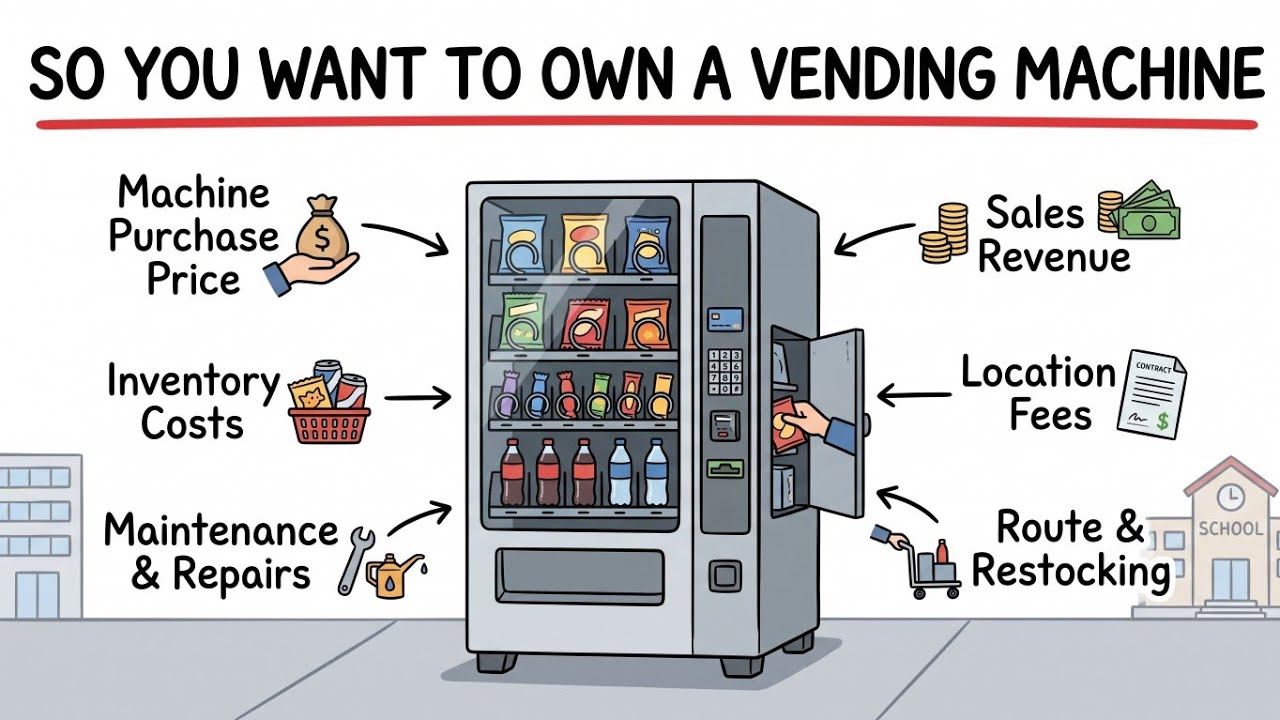
Maintenance belongs in your vending machine operating costs from the start. Follow the schedule for the selected model. Ask which tasks the operator can perform, what training is provided, and which jobs require a service technician. Include cleaning materials, scheduled inspections, and replacement consumables where applicable.
Vending machine hidden costs often become clearer when you read the warranty as a list of covered obligations. Parts coverage may differ from labor, travel, freight, remote support, or on-site response. Check the claim process, exclusions, service location, and who pays to return a component. “Under warranty” does not answer all those questions.
For used equipment, request service history and an inspection appropriate to its condition. For any machine, ask about part availability, lead times, manuals, and support arrangements. A low-priced part can still create an expensive interruption if it takes a long time to arrive.
To allow for irregular vending machine operating costs, build a reserve for plausible incidents for your equipment and service area. Consider the cost of a visit, a likely replacement component, urgent freight, and stock that may need removal. Update the allowance as actual maintenance records accumulate.
Downtime and customer problems have different financial effects
Some hidden costs of owning a vending machine appear only when a fault creates repair spending, stock loss, refunds, and an interruption in sales. Record these separately. Lost revenue is not an additional invoice, and lost revenue is not the same as lost profit.
For a planning estimate, identify sales that are unlikely to be recovered and subtract the variable costs avoided while those sales were not made. Consider whether a customer buys later, buys from another machine you own, or leaves entirely. This gives a more useful estimate of lost contribution than counting all unavailable hours at full sales value.
Make customer support part of the operating plan. Provide a clear way to identify the machine and report a problem. Assign responsibility for reviewing failed purchases, refunds, and payment disputes. Confirm how the processor handles associated fees.
For a smart cabinet, test the handling of an incorrect basket or other transaction exception before launch. For a dispensing machine, test unsuccessful delivery and the corresponding payment outcome. The aim is to understand the complete customer and support process, including staff time.
Insurance, approvals, and administration belong in the budget
Requirements vary by business activity and location. The U.S. Small Business Administration directs businesses to the relevant authorities for registration, licensing, and permitting requirements; it does not provide a single global vending permit or fee. [SBA launch guidance](https://www.sba.gov/counseling/launch-your-business/)
For the intended market, confirm applicable business, food-sales, equipment, and site requirements with the relevant authority or qualified adviser. Budget for required applications, inspections, renewals, documentation, and professional help. Avoid assuming that equipment paperwork alone settles the operator’s obligations.
Ask an insurer which risks and contractual requirements the proposed cover addresses. Review equipment damage, theft, liability, deductibles, and any exclusions relevant to stock or interruption. Coverage depends on the policy.
Operating a vending machine business also requires administrative resources: bookkeeping, invoice checks, commission statements, stock records, and tax reporting. Budget the actual services you need, while keeping taxes collected from customers separate from revenue retained by the business.
Marketing and product changes need a spending limit
Good placement still leaves practical communication work: visibility, readable prices, payment instructions, and a clear customer-support contact. Confirm what signs or graphics the venue permits and who pays for replacements.
Promotions can raise sales while also increasing the cost of operating a vending machine. If you test sampling, launch discounts, bundles, or digital promotion, record the cost and the result. Compare additional contribution after discounts, product costs, payment fees, and labor. Higher sales alone do not establish that a promotion paid for itself.
Use customer feedback to test an assortment change in a controlled quantity. A packaging change, new shelf layout, or different product size may require additional setup or testing. Make that work visible in the budget rather than treating every new product as a simple refill.
Financing, relocation, and exit costs complete the picture
When comparing purchase, lease, or finance offers, request the payment schedule, upfront charges, end-of-term obligations, ownership terms, and applicable early-exit provisions. A manageable monthly payment does not describe the whole commitment.
Vending machine hidden costs can include relocating a weak placement. Allow for deinstallation, transport, new site preparation, downtime, and any contract charges. Moving a machine should be assessed against the expected improvement at the next site, with uncertainty kept visible.
At the end of ownership, resale value is an estimate until a buyer agrees to pay it. Consider collection costs, refurbishment, data removal, account transfer, and disposal where applicable. Use a cautious residual-value assumption when comparing long-term alternatives.
A worked example: what does one machine actually cost?
To put vending machine hidden costs into a complete budget, consider one illustrative U.S. snack-and-drink machine purchased outright and delivered domestically. This is a budgeting exercise, **not an actual customer case, a Zhigou quotation, or a prediction of earnings**. The published references above anchor selected inputs; every remaining amount is an explicit planning assumption.
Step 1: Calculate the launch cash requirement
Assume a $4,000 machine without a cashless reader, $500 delivery, a $450 reader allowance, $50 for activation and setup, $300 opening inventory, $200 site preparation, and $400 combined allowance for equipment purchase taxes, registrations, and launch administration. These inputs total **$5,900**. Hardware and setup are separate only because this example assumes they are excluded from the machine price; remove them if already included.
The $450 hardware allowance is rounded for planning, not the exact Nayax checkout price. Its storefront displays different bundle totals and activation selections, so confirm the complete order before replacing this allowance. The $400 tax and administration line is also an assumption, not a quoted tax rate or a claim that every jurisdiction charges the same fees.
Add a separate **$1,000 working-capital and emergency buffer**, giving a total funding target of **$6,900**. This buffer is money retained in the business, not an immediate expense. It should be sized against payout delays, replenishment needs, and plausible repairs. International shipping, customs costs, a financed purchase, or a major site alteration would need additional inputs.
Step 2: Calculate monthly vending machine operating costs
Assume 600 purchases per month at $2.50 each: **$1,500 monthly sales**, excluding sales tax and after any discounts or refunds. For simplicity, assume no refund incidents in the example. Card payments account for 80% of sales; that is a scenario choice, not an industry statistic.
Use a 5.95% card-processing assumption, consistent with one reference rate displayed by [VMFS USA]. It is a reseller's published reference, not a binding Nayax offer. The actual processor contract must establish the rate and charging basis.
| Monthly item | Calculation or assumption | Amount |
|---|---|---|
| Cost of products sold | 45% × $1,500; assumed product mix | $675.00 |
| Card processing | $1,500 × 80% × 5.95% | $71.40 |
| Site commission | Assumed 10% of sales, with no extra fixed rent | $150.00 |
| Stock loss at purchase cost | Separate assumed allowance equal to 2% of sales | $30.00 |
| Reader service | Published package used as budget input | $9.99 |
| Electricity | Assumed midpoint within the published reference range | $35.00 |
| Routine maintenance allocation | Assumed annual budget of $480 ÷ 12 | $40.00 |
| Insurance allocation | Planning assumption; obtain a policy quote | $45.00 |
| Storage allocation | Planning assumption | $20.00 |
| Replenishment labor | Four visits × 1.25 hours × $20/hour | $100.00 |
| Route vehicle expense | Four visits × $12 allocated vehicle cost | $48.00 |
| Cleaning and administration | Planning assumption | $12.00 |
| Total budgeted monthly costs | Sum of the above | $1,236.39 |
| Surplus after budgeted costs | $1,500 − $1,236.39 | $263.61 |
After these vending machine operating costs, the result is a **17.57% planning surplus**, before income tax, financing, and depreciation. It is not accounting net profit or a guaranteed cash distribution. Maintenance may be paid irregularly, and inventory purchases may differ from the cost of products sold. Keep the $40 allocation available for upkeep instead of treating it as spare spending money.
The model assumes five total labor hours include stock preparation, travel, and servicing. The vehicle allowance excludes labor and already covers the allocated vehicle running expense. If you do the work yourself without taking pay, monthly cash retained may initially be $100 higher, but the work still consumes your time. If you hire help, use the full applicable employment cost instead of assuming $20 covers every obligation.
The 45% product-cost line covers items actually sold. The $30 loss allowance covers different, unsold items written off at their purchase cost; it is expressed as 2% of revenue only to make this scenario easy to adjust. Do not also include those same write-offs in the 45% line.
No separate software subscription is included because this example assumes the reader package is sufficient. If you choose VendSoft Essentials for this single machine, add the full $19 account fee: the modeled surplus falls to **$244.61**. At five machines, equal allocation would be $3.80 each, assuming the same plan remains adequate. [VendSoft pricing](https://www.vendsoft.com/pricing/)
Step 3: Calculate the sales needed to cover those costs
For this example, the costs assumed to vary with revenue are goods at 45%, processing at 4.76% of total sales (80% × 5.95%), commission at 10%, and stock loss at 2%. Together they consume **61.76% of sales**, leaving a **38.24% contribution margin** toward the remaining costs.
The other monthly budget lines total **$309.99**. Under these assumptions:
**Budget break-even sales = $309.99 ÷ 38.24% = $810.64 per month.**
At $2.50 per purchase, round up to **325 purchases per month**, or approximately **11 per day over 30 trading days**. This covers the modeled operating budget, including labor and the maintenance allocation. It does not recover the original machine investment or cover excluded taxes and financing.
The cost of operating a vending machine changes with its workload. This calculation assumes the same product margin, payment mix, and service schedule throughout. Labor and travel can increase in steps when more visits are needed, so this break-even figure is not valid for every sales level.
Step 4: Compare sales scenarios and simple payback
| Scenario | Monthly sales | Purchases at $2.50 | Surplus after the same modeled costs | Simple recovery of $5,900 launch outlay |
| Lower sales | $900 | 360 | $34.17 | About 173 months |
| Base case | $1,500 | 600 | $263.61 | About 22.4 months |
| Higher sales | $2,100 | 840 | $493.05 | About 12.0 months |
Each surplus equals **sales × 38.24% − $309.99**. Simple payback divides the $5,900 launch outlay by that surplus, assumes an immediate steady level of trading, and ignores financing, income tax, changes in stock needs, and the time value of money. The very long lower-sales result is a warning about the scenario's weak economics, not a credible forecast of equipment life.
If you instead want the business to generate an amount equal to the entire **$6,900 funding commitment**, including the retained buffer, the base calculation is **$6,900 ÷ $263.61 = 26.2 months**. That is a different target: the buffer remains available cash unless used. Neither calculation justifies spending it as though it were profit.
A $200 monthly loan payment would reduce the base-case budgeted cash remainder to **$63.61**, but a financed investment requires its own down-payment and repayment model; do not combine that remainder with the full-cash purchase payback above. An extra $60 service visit would reduce the unfinanced base surplus to **$203.61** for that month.
A major repair needs a similar cash check. If a $600 repair occurs before enough maintenance money has accumulated, the business needs accessible cash to pay it. When comparing actual results with budget, replace the related maintenance allowance with actual expenditure for the relevant period rather than subtracting both for the same work.
Step 5: replace assumptions with operating records
Vending machine hidden costs become manageable budget items when estimates are replaced with evidence. Before ordering, replace equipment, delivery, payment and site charges with written quotations. During operation, replace estimated product margins, visit time, stock losses and energy use with measured results. Review both profitability and the timing of cash payments.
For example, opening inventory in this scenario is $300, while the base month consumes $675 of sold stock plus $30 of lost stock. Maintaining the opening stock level would require roughly **$705 of replacement inventory** over that month, assuming unchanged purchase prices and no supplier credit. Part can be funded by sales receipts, but payout timing determines how much working capital is needed.
For a multi-machine route, allocate shared insurance, storage, and software consistently. Do not multiply a whole-business premium by the machine count, or divide it by machines that do not yet exist. The value of a cost model is that you can see which specific change makes a site viable.
Match the machine to the operating plan
Compare the cost of operating a vending machine with spiral dispensing against an AI vision cabinet using the products and workflows you intend to run. Ask for tests with representative packaging, transaction flows, refill procedures, and exception handling. Compare required service visits and support arrangements alongside capacity and purchase price.
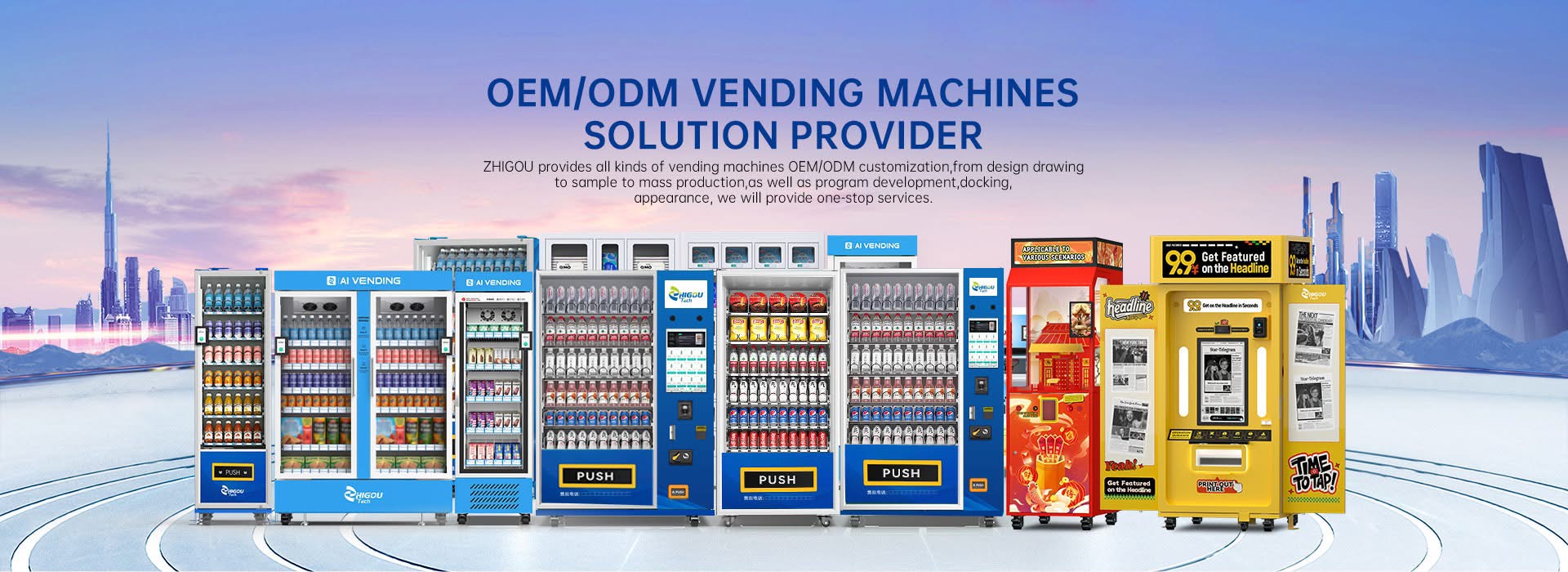
[Zhigou Tech] lists spiral vending machines and AI vision smart vending cabinets in its product portfolio, together with customization options covering areas such as cabinet design, branding, product configuration, and payment modules. This provides a starting point for discussing equipment fit; the final configuration and commercial terms need confirmation for the selected model.
When requesting a Zhigou proposal, share your target country, venue type, product dimensions, temperature requirements, expected payment methods, and access conditions. Ask for an itemized configuration and a clear separation between included equipment, optional features, recurring services, and delivery responsibilities.
A useful quotation makes the hidden costs of owning a vending machine visible enough to place in an operating budget. It helps you decide what the machine will require after installation, as well as what it costs to buy.
Questions to resolve before placing an order
Use these questions to close the remaining gaps in the proposal:
- Where does delivery end, and who completes installation and acceptance testing?
- Which payment, connectivity, and software costs apply throughout ownership?
- What does the site agreement require during quiet periods and on termination?
- Who handles faults and customer refunds, and what does the warranty actually cover?
- What will it cost to relocate, transfer, or retire the machine?
Record the answers with the quotation and review them again if the model, country, venue, or service package changes.
Frequently asked questions
What is the highest hidden cost of a vending machine?
There is no universal answer: vending machine hidden costs depend on the route. Compare total spending by category, including stock losses and service time. A remote location, demanding product range, or expensive service arrangement can change which cost matters most.
How much should I reserve beyond the machine price?
In the worked example, a $4,000 machine requires $5,900 of launch spending plus a $1,000 cash buffer: $2,900 beyond the machine price. That is a scenario, not a universal allowance. Replace delivery, setup, inventory, and local charges with your own quotations.
Do smart vending machines eliminate operating costs?
They can change the work involved, depending on the system and how it is used. Ask which visits or tasks a feature is expected to reduce, what services it requires, and how you will verify the result. Physical replenishment and responsibility for customer problems remain part of the operating plan.
Can I operate a vending machine part-time?
Assess the schedule required by the actual location and product mix. Include preparation, travel, replenishment, record-keeping, and an arrangement for urgent faults. Machine availability and owner availability are different planning questions.