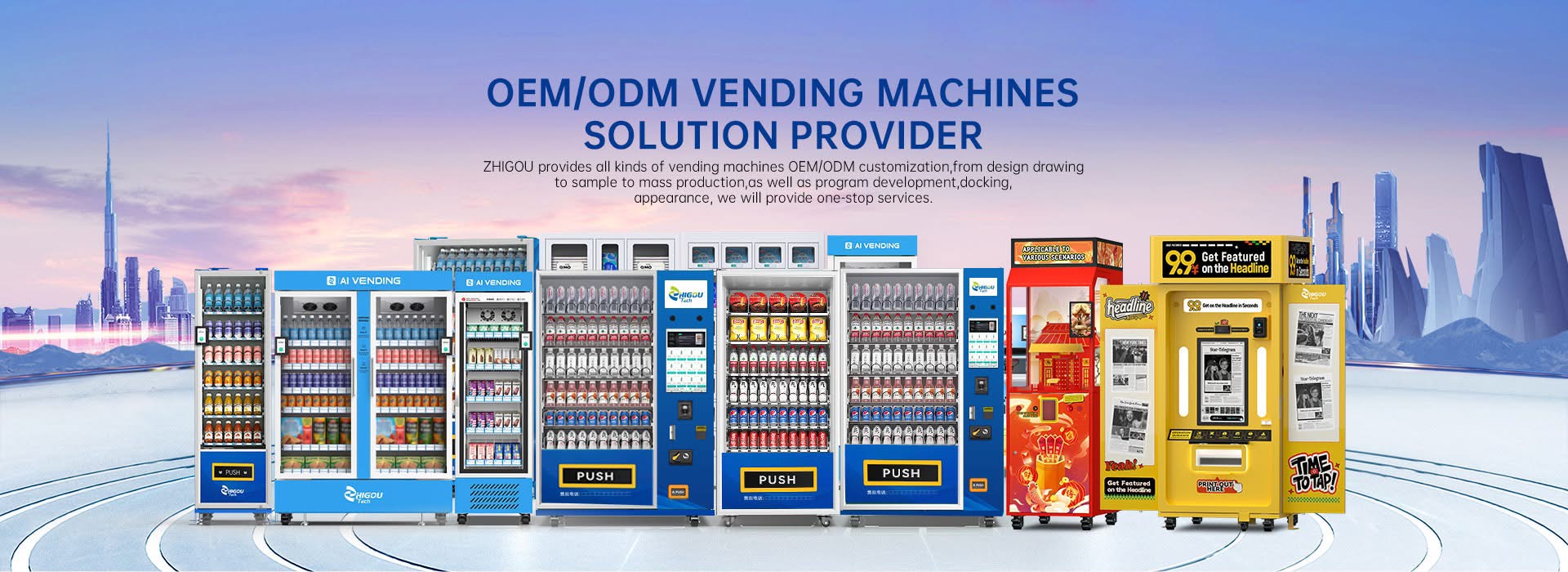
The market for AI-powered vending machines is expected to grow at a compound annual growth rate (CAGR) of 11.45%, reaching $53.95 billion by 2033. The transition from mechanical button-press systems to AI-powered retail automation, which can instantly recognize products, handle multiple items at once, and complete transactions in under 30 seconds, is reflected in this expansion. In this guide, you’ll discover how AI vending machines work through their core technologies, understand the step-by-step transaction process, and learn what separates these smart systems from traditional models. Whether you’re exploring an AI vending machine business or evaluating AI vending machines for sale, this breakdown reveals the complete technology stack behind modern autonomous retail.
What Makes a Vending Machine “AI-Powered”?
Although the phrase "AI vending machine" is frequently used, the underlying technology is distinct. A really intelligent vending machine is more than just a device with a card reader or touchscreen. These are characteristics. A machine is considered AI-powered if it can perceive, learn, and act without human input in real time.
There are three core capabilities that define a true AI smart vending machine:
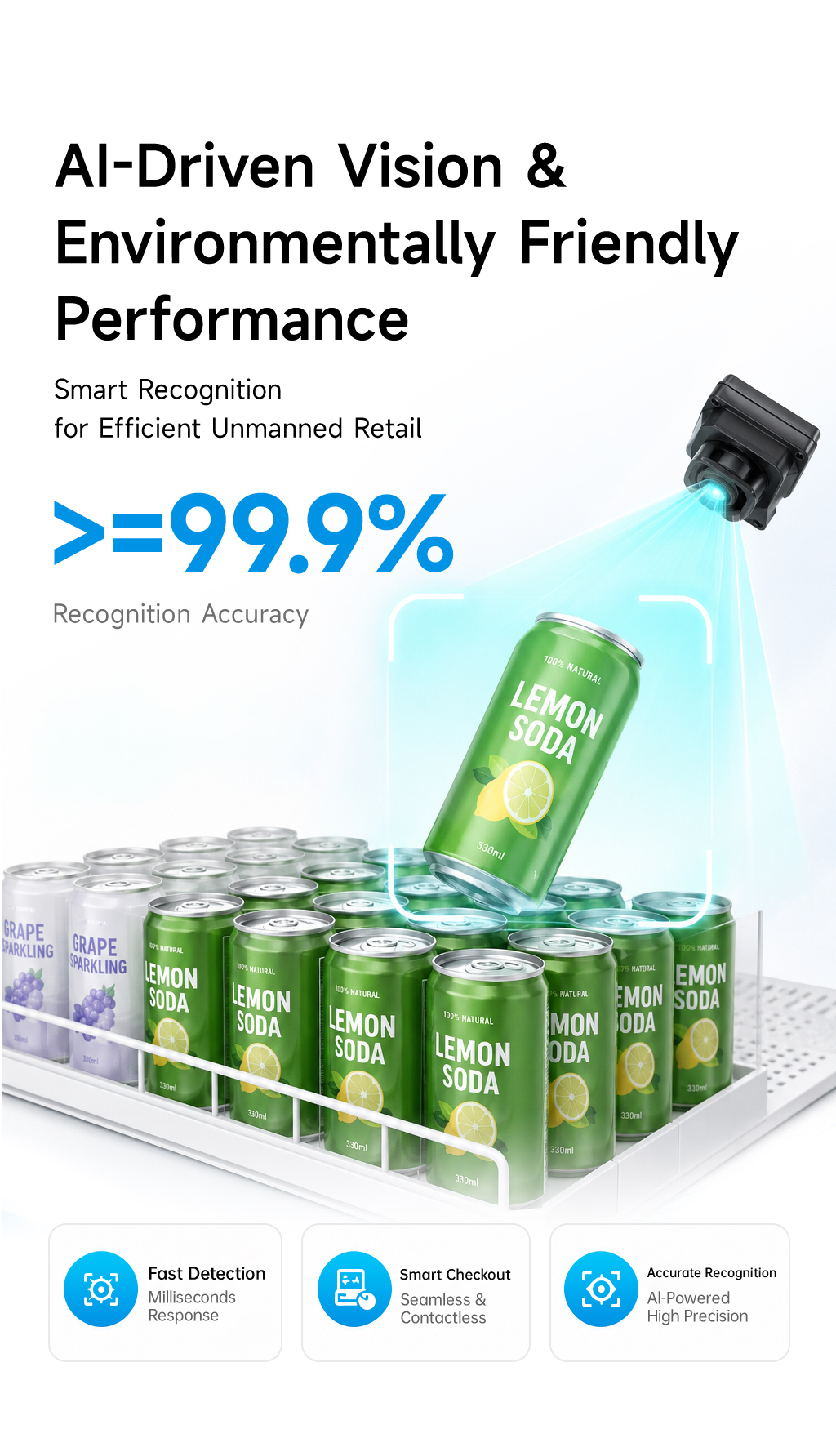
AI Vision: The merchandise shelf is continuously monitored by cameras within the machine. The vision system uses shape, color, label, and position to pinpoint the specific item that was removed by a consumer. This is how grab-and-go checkout operates without the need for manual scanning or barcodes.
Sensor Fusion: To cross-check every choice, weight sensors are positioned underneath each shelf or product slot and collaborate with the camera system. The system records the transaction with high confidence if the camera detects a hand reaching for a protein bar and the weight sensor verifies a 60-gram drop in that slot. Accuracy is increased to the 99 percent level by combining eyesight and weight data.
Machine Learning: Over time, the system builds a model of purchasing behavior specific to that location. It learns which products sell fastest on Monday mornings versus Friday afternoons, when demand spikes, and which items are frequently bought together. This data feeds directly into restocking recommendations, dynamic pricing, and product placement suggestions — all of which improve profitability over time.
You have a smart machine, not an AI machine, if you remove any one of these three components. When deciding what to purchase and what kind of return to anticipate, this distinction is important.
The Technology Stack Inside an AI Vending Machine
Understanding the components inside an AI-powered vending machine helps operators make better purchasing decisions and troubleshoot issues faster. Here is what the full system looks like from hardware to cloud.
Hardware Layer
The cameras, weight sensors, refrigerated or ambient storage, embedded computer, payment terminal, and touchscreen interface are all housed in the intelligent vending machine. Commercial-grade compressors for temperature management, several camera angles to remove blind spots, and electromagnetic door locks that only unlock when a legitimate payment is verified are features of high-end models.
Edge Computing Layer
The majority of AI smart vending machines process visual data locally on an integrated chip instead of transferring each frame of camera footage to a distant server for analysis. We refer to this as edge computing. It minimizes data transfer costs, decreases latency, and maintains a quick checkout process even with spotty internet connectivity. While reporting, pricing updates, and remote management are handled by the cloud, real-time product recognition is handled by the edge computer.
Payment Processing Layer
Modern AI-powered vending machines accept credit and debit cards, Apple Pay, Google Pay, QR code payments, and, in some models, biometric face-scan checkout. All transactions are encrypted end-to-end and processed through PCI-compliant payment gateways. The card tap or face scan serves a dual purpose — it authorizes the payment and unlocks the machine door simultaneously.
Cloud and Connectivity Layer
A cloud-based vending management dashboard logs each transaction, inventory change, and system event. Operators may view sales in real time, check stock levels by product and location, get low-inventory warnings, alter fleet-wide pricing, and run performance reports using this dashboard, which they can access from any device. A standalone piece of equipment becomes a managed, scalable corporate asset thanks to this layer.
AI and Analytics Layer
On top of the cloud data sits the intelligence layer — the AI-powered vending machine learning models that generate demand forecasts, flag underperforming products, suggest optimal price points, and identify the best times to run promotions. The longer a machine operates in a location, the more accurate these models become.
How the AI Vending Machine Works: Step by Step
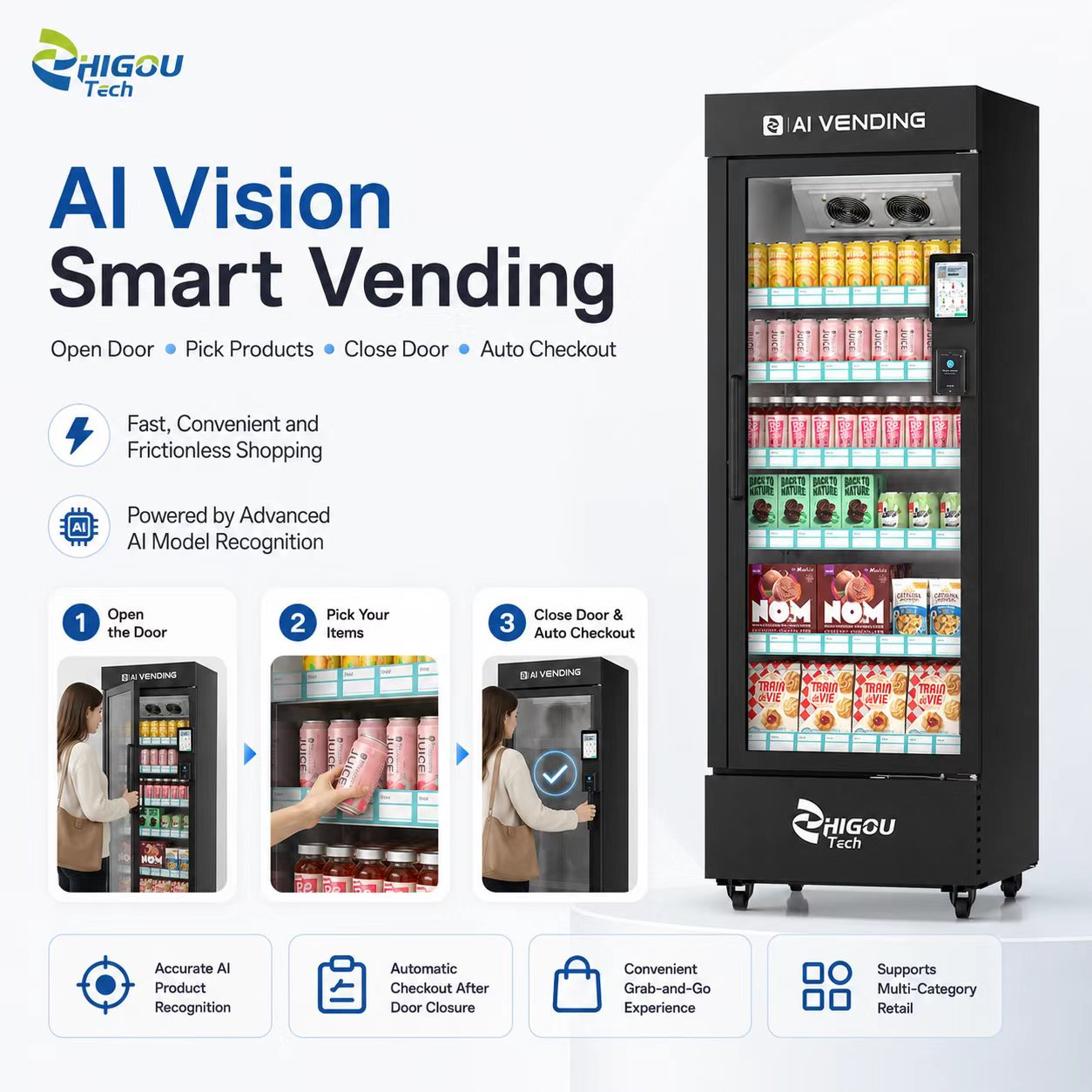
Step 1: Authorize Payment and Unlock the Door
To start shopping, the customer simply uses the card reader to authorize the payment. Before the door is unlocked, the system sets a pre-authorization amount based on the configured purchase limit or the potential value of the products available in the intelligent vending machine. The pre-authorization does not mean that the customer is charged the full amount. Instead, it temporarily verifies or reserves an available amount to ensure that the payment method can support the transaction. Once the authorization is successful, the electronic lock is released, and the customer can open the door and begin shopping.
Step 2: Select Products and Close the Door
Customers are allowed to choose the things they desire once the door is open. An AI smart vending machine enables customers to engage directly with the products, in contrast to standard vending machines that require users to select a product number or a certain dispensing lane. During a single shopping session, customers may purchase one item or several. Additionally, if consumers choose not to buy a thing, they can pick it up, inspect it, and return it. The customer just shuts the door after they are done shopping. This brings the shopping experience closer to that of a convenience store with self-service: Open → Grab → Close.
Step 3: AI Identifies the Products You Took
AI vision identifies products by visual features. The built-in camera records video from the moment the door opens until it closes, then uploads the video to the cloud. AI uses a unique tag to identify the product and a weight sensor to verify the expected weight, determining which items the customer took and in what quantities, and then deducts the amount set by the machine. If the AI is unable to determine the order, it is reviewed manually. If manual review is also unsuccessful or if the transaction is deemed non-compliant, an exception order is pushed to the machine owner’s backend for the owner to review and decide.
Step 4— Automatic Checkout
The customer closes the door and walks away. The pre-authorized payment method is charged for exactly the items taken — nothing more. A receipt is sent digitally. The entire in-machine interaction from door-open to door-close typically takes under 30 seconds.
Step 5 — Inventory and Data Update
Every transaction immediately updates the AI-powered vending machine’s inventory count in the cloud. If a product drops below a set threshold, a restocking alert fires to the operator's dashboard and mobile app. The sale data feeds into the analytics model, incrementally improving demand forecasts for that location.
AI-powered Vending Machines vs. Traditional Vending Machines
AI smart vending machines differ from conventional models in ways that go much beyond technology. These technologies, which have an impact on consumers, operators, and company profitability, reflect essentially distinct approaches to retail automation. This is a thorough comparison:
Comparison Dimension | Spring Coil Machine | AI Door-Opening Cabinet |
Core Shopping Flow | Pay first, then dispensing; spiral coil trays push out products one by one | Authorize to open door → customer self-selects → automatic settlement upon door close (convenience-store-like experience) |
Shopping Experience | Closed; the customer can only take the single dispensed item | Open; customers can directly see and pick up multiple items |
Pilferage / Shrinkage Risk | Low: customers cannot touch all products; they only take the dispensed item after purchase | Present: customers can directly handle products; abnormal behavior or recognition errors may cause losses |
Funds & Product Security | High: pay-before-dispense; backend records orders and sales data | Medium: relies on AI recognition and backend monitoring; abnormal orders require manual/system intervention |
Maturity & Cost | Mature structure, relatively controllable cost, high cost-performance ratio | Newer technology; ROI acceptable for large operators with sufficient sales volume |
Average Transaction Value (ATV) Potential | Lower: only one dispensed item can be purchased | Higher: open layout encourages impulse add-ons (e.g., buying a bottle of water may lead to grabbing bread/snacks), lifting ATV |
Product Compatibility Range | Limited: oversize, fragile, soft-packaged, or irregularly shaped products may not fit; it depends on the coil tray size and angle | Broad: does not rely on spiral coil dispensing; supports multi-category products with regular packaging that are AI-recognizable |
Dispensing / Jam Risk | May jam: product size, placement angle, and tray mismatch can affect dispensing | No jam issue, but recognition accuracy is not 100%: glare, abnormal placement, ambient light changes, sensor interference, etc., affect recognition |
Shelf-Stocking / Operational Requirements | Emphasize product selection, continuous arrangement, uniform backward tilt, and trial selling | High: AI recognition depends on product images, packaging differentiation, and standardized display; must strictly follow onboarding photos and product specifications |
Suitable Scenarios | Unattended locations such as schools, factories, offices; first-time deployment, limited budget, standard product categories; customers who prioritize product security and strict site management | High-frequency scenarios such as offices, hotels, gyms, campuses/parks, locations with a rich product mix, and strong impulse purchasing |
Main Disadvantages | ① Potential jamming; ② Limited product categories | ① Shrinkage exists; ② Recognition not 100%; ③ High stocking requirements |
Mitigation Methods | ① Emphasize product selection, continuous arrangement, uniform tilt, and trial selling; ② Recommend door-opening cabinets, grid lockers, or belt/pusher solutions | ① Shrinkage: control via surveillance, backend anomaly orders, pre-freeze amounts, and product norms; ② Recognition: emphasize technical boundaries in training, make no absolute promises; ③ Stocking: strictly follow onboarding photos and product specifications |
If you'd like to learn more, feel free to check out this article from Zhigou Technology: AI Vending Machines vs Traditional Vending Machines: Which is right for you?
Conclusion
AI-powered vending machines are transforming the way unattended retail operates by integrating AI vision, smart payment, electronic locking, inventory management, and cloud-based software into a single automated retail system. From the consumer’s perspective, the entire process can be simply summarized as Open → Grab → Close → Pay. Inside the machine, the AI vision system identifies changes in product availability, the transaction system calculates the order and processes payment, the inventory system updates product quantities, and the cloud-based backend enables operators to manage the system remotely. Compared to traditional vending machines with fixed product slots, AI smart vending machines offer greater flexibility in product placement and shopping methods. As unmanned retail continues to evolve, this technology is expected to play an increasingly significant role in offices, gyms, hotels, apartment buildings, transportation hubs, and other high-traffic retail settings.